
There are 16 AI SEO tools compared in this guide across 5 workflows: research, content optimization, AI writing, SEO automation, and AI search visibility. The best AI SEO tool depends on workflow fit, with Semrush leading all-in-one SEO, Surfer SEO leading content optimization, AirOps leading workflow automation, and Google Search Console leading free first-party validation.
What Are the Best AI SEO Tools at a Glance?
The following table compares 16 AI SEO tools across 5 workflows by category, best fit, starting price, and free access.
Replace your current table body script with this updated version that includes the **rating column + score bars** like the first table design. “`html| # | Tool | Category | Best for | Starting price | Score | Free plan | Visit |
|---|
No single tool covers every AI SEO job equally. All-in-one platforms provide databases, content tools provide optimization guidance, and AI visibility tools track brand presence across answer engines.
- Use Semrush for all-in-one keyword research, competitor analysis, AI visibility, and reporting.
- Choose Surfer SEO for SERP-based content optimization and content score workflows.
- Pick AirOps for workflow automation, content operations, and AI citation gap analysis.
- Select Google Search Console for free validation of impressions, clicks, CTR, indexing, and page experience.
- Combine Frase, Scalenut, or Writesonic with an SEO database when content production requires briefs, drafts, and optimization.
What Are AI SEO Tools?
AI SEO tools are software platforms that use machine learning, NLP, LLM workflows, or automation to improve SEO research, content, reporting, and AI search visibility. AI SEO tools support keyword research, content briefs, on-page optimization, AI writing, rank tracking, technical audits, and visibility tracking across Google AI Overviews, ChatGPT, Gemini, Claude, and Perplexity.
Traditional SEO tools measure Google rankings, backlinks, crawl health, and keyword demand. AEO tools optimize direct answers for answer engines and featured snippets. GEO tools track brand mentions and citations inside generative engines. The best AI SEO tools overlap across all 3 layers when SEO teams combine databases, content optimization, and AI visibility tracking.
The 5 core AI SEO functions are research, briefs, drafting, optimization, and visibility tracking. For content teams, content optimization tools improve entity coverage and SERP alignment. For agencies, AI SEO tools reduce repeated reporting and brief-generation work across multiple client projects.
How Were the Best AI SEO Tools Evaluated?
The 16 AI SEO tools were evaluated across 8 criteria using SERP analysis, 3 competitor keyword CSVs, 5 extracted competitor pages, the consolidated query network, and tool database files. The competitor set included Rankability, Freddie Chatt, eesel AI, OneLittleWeb, and Whatagraph.
What Criteria Were Used?
There are 8 criteria used to evaluate each AI SEO tool, including data coverage, AI functionality, and workflow fit.
- Data coverage
- AI functionality
- Workflow fit
- Pricing transparency
- Free access
- Reporting depth
- Integration quality
- Content quality controls
These criteria match the SERP's commercial investigation intent. Buyers compare AI SEO tools by workflow, not by a universal feature checklist.
What Research Sources Were Used?
There are 5 research source types used for this article.
- Reviewed SERP analysis for entities, AI Overview patterns, n-grams, and search intent.
- Extracted competitor content from 5 ranking pages using the content-brief pipeline extractor.
- Compared tool database files for Semrush, Ahrefs, SE Ranking, Surfer SEO, Frase, Scalenut, Writesonic, AirOps, and supporting tools.
- Consolidated keyword clusters from Rankability, Freddie Chatt, eesel AI, and reconstructed related keywords.
- Checked pricing and feature limits where local tool records contain verified March 2026 data.
According to the competitor analysis, every ranking article uses tested-tool framing, numbered tool reviews, or comparison tables. This article follows the same pattern and adds workflow stacks for agencies, startups, and content teams.
What Are the Best All-in-One AI SEO Platforms?
There are 3 best all-in-one AI SEO platforms in this category: Semrush, Ahrefs, and SE Ranking. These platforms combine keyword research, competitor analysis, rank tracking, site auditing, reporting, and AI search visibility features.
The following table compares the 3 all-in-one AI SEO platforms on AI function, data coverage, starting price, and best fit.
| Tool | AI SEO function | Data coverage | Starting price | Best fit |
|---|---|---|---|---|
|
|
AI Visibility Hub, Content Hub, AI Copilot |
27.9B+ keywords, 43T+ backlinks, 190+ countries
|
$117.33 | Agencies and full-stack SEO teams |
|
Ahrefs
|
Brand Radar, AI Content Helper, AI Content Grader |
28.7B+ keywords, 35T+ live backlinks, 229 countries
|
$129 | Backlink-led SEO teams |
|
SE Ranking
|
AI Results Tracker, AI Search research |
Rank tracking, keyword research, backlink monitoring, AI results
|
$103 | Value-focused teams |
Semrush leads on breadth, Ahrefs leads on backlink intelligence, and SE Ranking leads on value and AI Overview tracking. Agencies comparing SEO tools for agencies and keyword research tools get the strongest coverage from this category.
1. Semrush - Best for All-in-One AI SEO Workflows
Semrush is an all-in-one AI SEO platform with AI visibility, keyword research, competitor analysis, site audit, content, local, social, and reporting workflows.
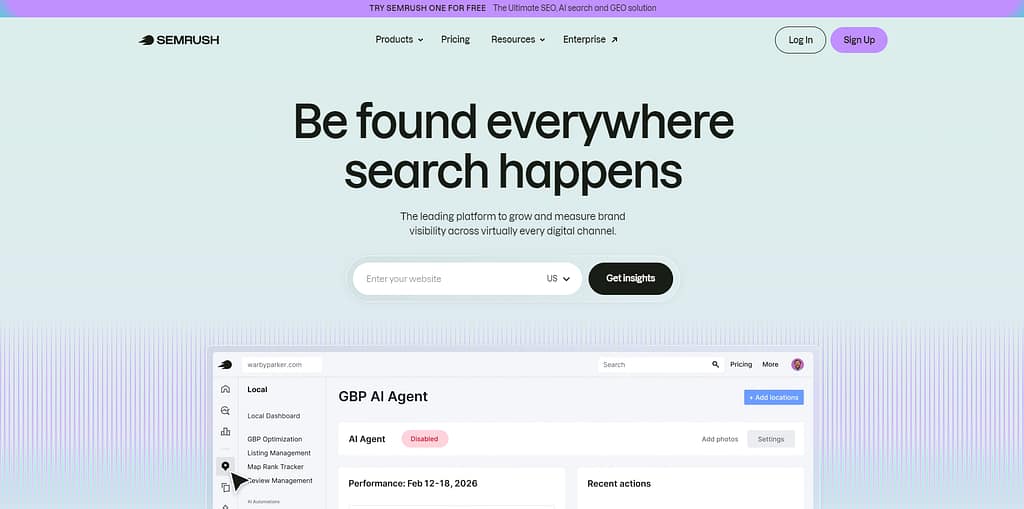
According to the Semrush tool database updated on 01-03-2026, Semrush Holdings, Inc. was founded in 2008 and is headquartered in Boston, Massachusetts. Semrush covers 27.9B+ keywords, 43T+ backlinks, Google and Bing data, and 190+ countries. Semrush pricing starts around $117.33/mo billed annually for Beginner, with Pro+ around $248.17/mo and Advanced around $455.67/mo.
Semrush's 5 AI SEO workflow functions are:
- Tracks keywords through Position Tracking and AI visibility reporting.
- Audits site health through technical SEO checks and JavaScript rendering on higher plans.
- Analyzes competitors through Domain Overview, Keyword Gap, Backlink Gap, and Traffic Analytics.
- Generates briefs and content through Content Hub, SEO Brief Generator, and AI Article Generator.
- Reports search, content, local, social, and AI PR performance through custom reports.
The following Image summarizes Semrush plan fit.
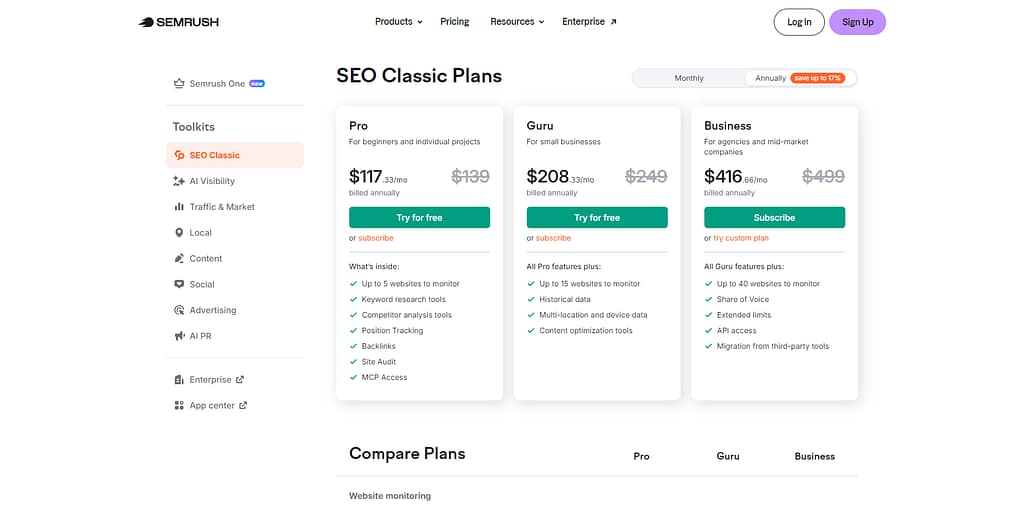
Semrush strengths include a large keyword database, AI Visibility Hub, content workflows, market intelligence, and reporting depth. Semrush limitations include higher cost than SE Ranking, no API access on Beginner or Pro+, and a larger learning curve than single-purpose tools. The Semrush review and Semrush vs Ahrefs comparison fit buyers comparing all-in-one AI SEO suites.
2. Ahrefs - Best for Backlink and Competitor Intelligence
Ahrefs is an SEO analytics platform with backlink intelligence, keyword research, competitor analysis, AI Content Helper, AI Content Grader, and Brand Radar.
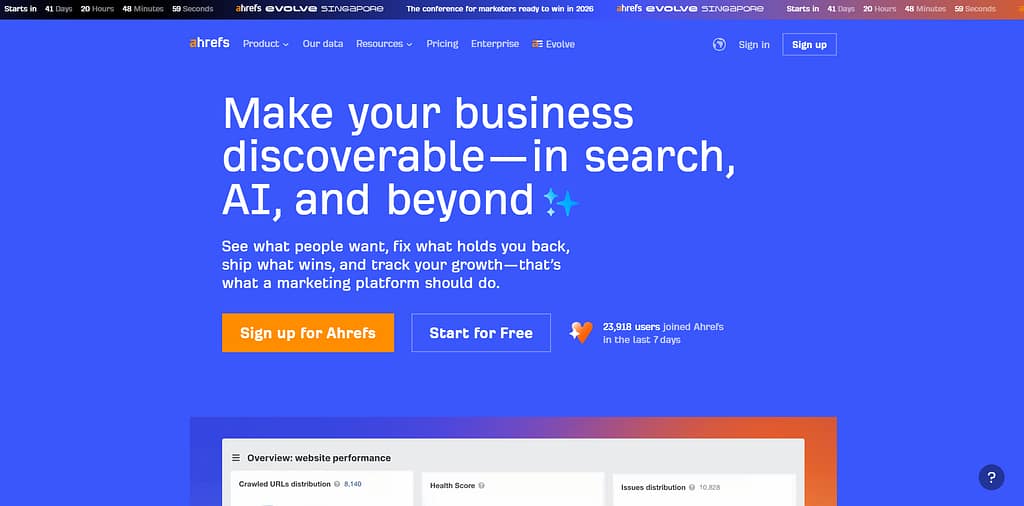
According to the Ahrefs tool database updated on 01-03-2026, Ahrefs Pte. Ltd. was founded in 2010 and is headquartered in Singapore. Ahrefs covers 28.7B+ keywords, 35T+ live backlinks, 10 search engines, and 229 countries. Ahrefs pricing starts around $129/mo billed annually for Lite, with Standard around $249/mo and Advanced around $449/mo.
Ahrefs' 4 core AI SEO research functions are:
- Analyzes backlinks through Site Explorer, Domain Rating, URL Rating, and link growth data.
- Researches keywords across Google, YouTube, Bing, Yahoo, Amazon, Baidu, and Yandex.
- Grades content through AI Content Helper and AI Content Grader.
- Monitors brand visibility through Brand Radar across AI-powered search engines.
The following Image summarizes Ahrefs plan fit.
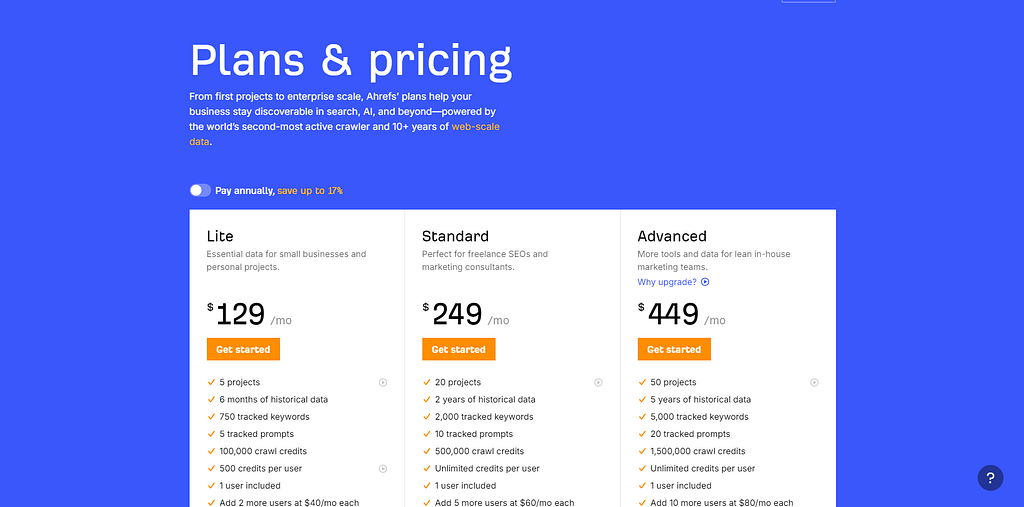
Ahrefs strengths include backlink data, competitor intelligence, multi-engine keyword research, and clean workflows. Ahrefs limitations include no free trial, strict user credits, and limited API access outside Advanced and Enterprise. The Ahrefs review and Ahrefs vs Semrush comparison fit backlink-led SEO teams.
3. SE Ranking - Best Value AI SEO Suite
SE Ranking is a value-focused AI SEO suite with rank tracking, keyword research, site audits, backlink monitoring, local SEO, content tools, and AI Results Tracker.
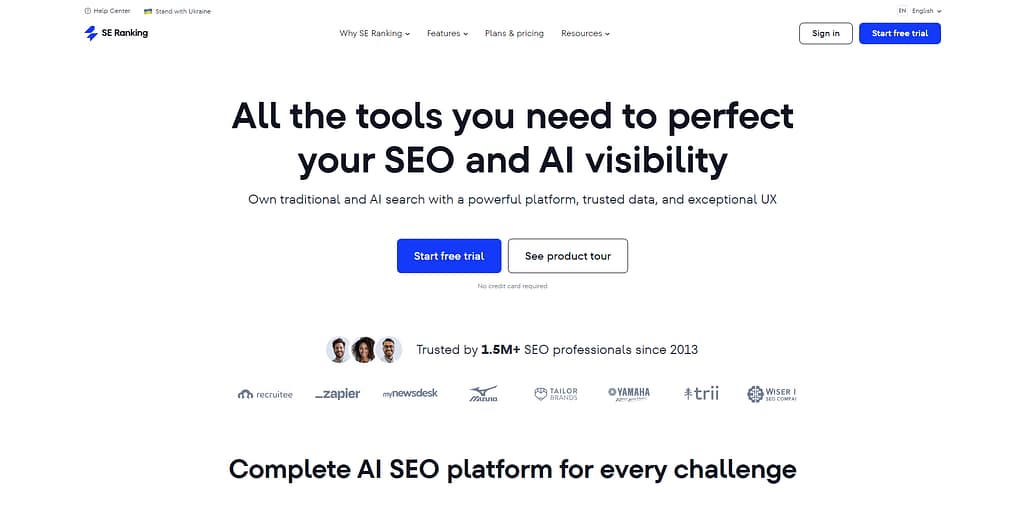
According to the SE Ranking tool database updated on 11-03-2026, SE Ranking was founded in 2013 and is headquartered in London. SE Ranking pricing starts around $103/mo billed annually for Core, with Growth around $223.20/mo. SE Ranking includes a 14-day trial and no credit card requirement for trial access.
SE Ranking's 5 AI SEO functions are:
- Tracks rankings through daily keyword updates and SERP feature data.
- Monitors AI results through AI Results Tracker, competitors, and sources.
- Audits websites through page-level crawl reports and SEO tasks.
- Groups keywords through Keyword Grouper and Keyword Manager.
- Reports client performance through dashboards and white-label reports on Business.
The following Image summarizes SE Ranking plan fit.
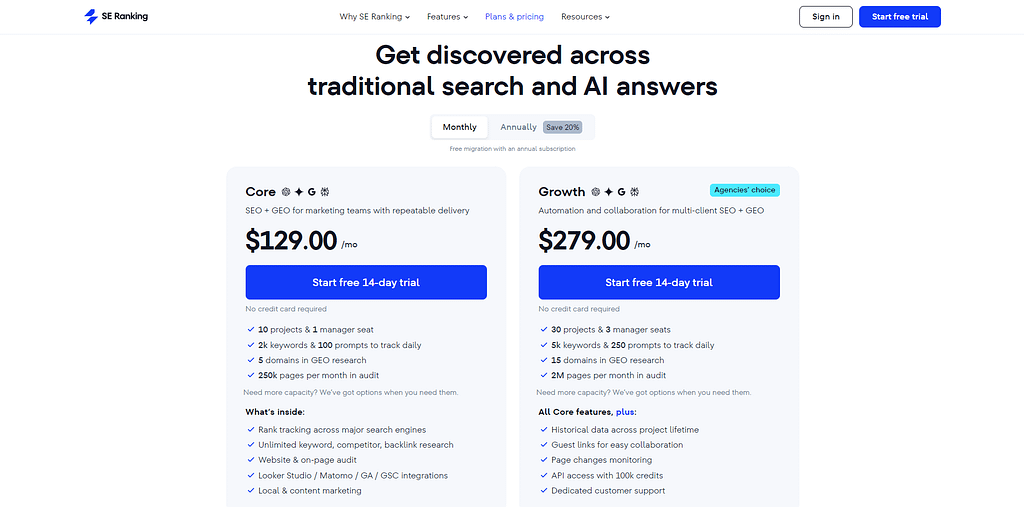
SE Ranking strengths include lower entry cost, AI Overview tracking, keyword grouping, backlink monitoring, and agency reporting. SE Ranking limitations include no free plan, no white-label reporting before Business, and limited historical data on lower tiers. The SE Ranking review and rank tracking tools article fit teams focused on ranking evidence.
What Are the Best AI SEO Content Optimization Tools?
There are 5 best AI SEO content optimization tools in this category: Surfer SEO, Frase, Clearscope, Rankability, and MarketMuse. These tools improve content briefs, topic coverage, entity coverage, competitor alignment, and editorial quality before publication.
The following table compares 5 content optimization tools on optimization method, AI feature, starting price, and best fit.
| Tool | Optimization Method | AI Feature | Starting Price | Best Fit |
|---|---|---|---|---|
| Surfer SEO |
SERP factors and Content Score
|
AI Writer, AI Tracker, fan-out queries | $79/mo billed annually | SEO content teams |
| Frase |
SERP briefs and topic gaps
|
AI outlines, custom AI tools, Frase Agent | $13/mo billed annually | Freelancers and small teams |
| Clearscope |
NLP content grading
|
Content reports and term suggestions | Vendor pricing | Editorial teams |
| Rankability |
NLP/entity optimization
|
Content Optimizer and AI search positioning | Vendor pricing | Agencies |
| MarketMuse |
Topic modeling
|
Content inventory and planning | Vendor pricing | Enterprise content strategy |
Content optimization tools differ from all-in-one suites because content optimization tools focus on page-level relevance. Teams comparing content optimization tools and content writing tools usually pair one optimization tool with one data platform.
4. Surfer SEO - Best for SERP-Based Content Optimization
Surfer SEO is a SERP-based content optimization platform that analyzes 500+ ranking factors, scores content, builds topical maps, and tracks AI search visibility.
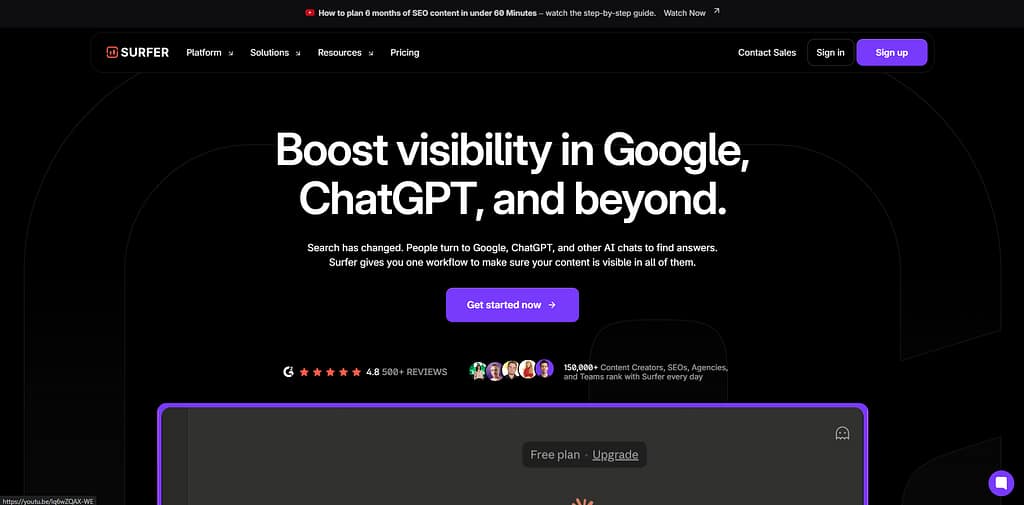
According to the Surfer SEO tool database updated on 11-03-2026, Surfer Sp. z o.o. was founded in 2017 and is headquartered in Wroclaw, Poland. Surfer SEO pricing starts around $99/mo billed annually for Standard, with Pro around $182/mo and Enterprise around $999/mo. Starter includes 15 content editors per month, 5 AI articles per month, 100 keyword research queries per day, and 2 user seats.
Surfer SEO's 5 optimization functions are:
- Scores drafts through Content Editor 3.0 and a 0-100 Content Score.
- Analyzes top 50 competitors through SERP Analyzer and 500+ ranking factors.
- Suggests NLP entities, headings, word count, and structure from live SERPs.
- Tracks AI visibility through prompt tracking and AI answer monitoring on higher plans.
- Integrates with Google Docs, WordPress, Jasper, Contentful, and REST API.
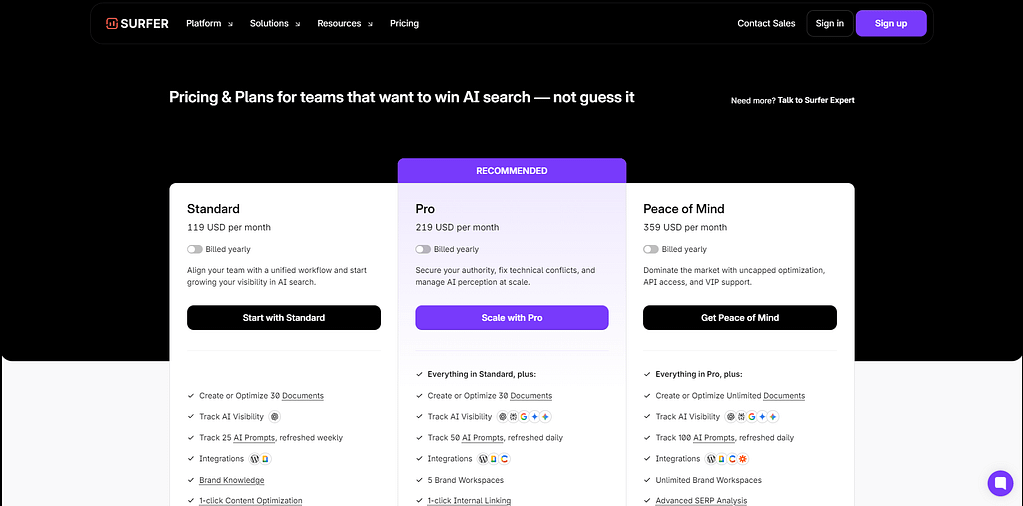
Surfer SEO strengths include real-time scoring, SERP-based recommendations, topical maps, and a polished writing workflow. Surfer SEO limitations include no free plan, add-on costs for audits and AI Tracker, and limited backlink or technical SEO coverage. The Surfer SEO review and Surfer SEO vs Clearscope comparison fit content teams evaluating optimization depth.
5. Frase - Best for AI Content Briefs
Frase is an AI content research platform that generates SERP-based briefs, topic gaps, AI outlines, and content optimization guidance for freelancers and small teams.
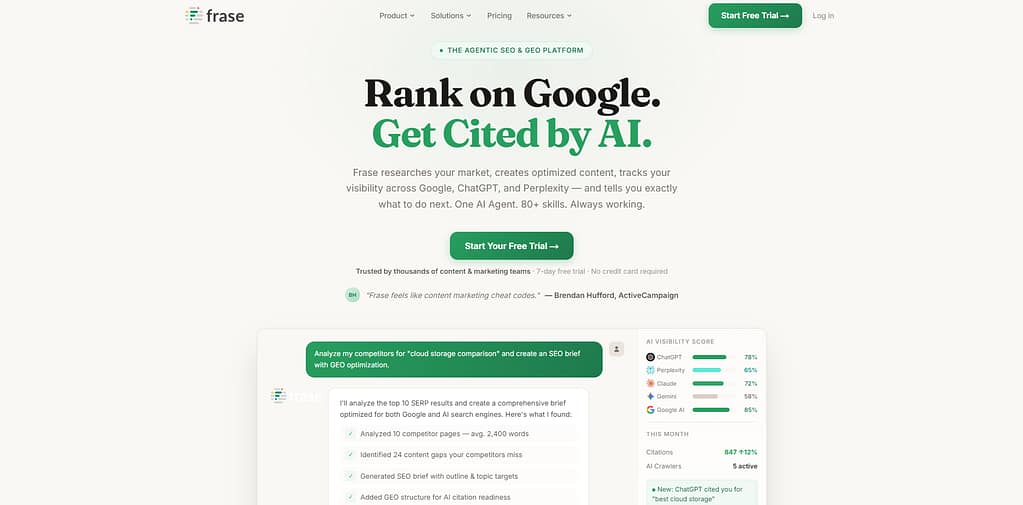
According to the Frase tool database updated on 11-03-2026, Frase was founded in 2016 and is headquartered in Boston, Massachusetts. Frase pricing starts around $39/mo billed annually for Solo, with Pro around $103/mo and Scale around $239/mo. Frase includes a 5-day trial for $1, and the AI Pro add-on costs $35/mo.
Frase's 5 content workflow functions are:
- Generates AI outlines from the top 20 Google results.
- Extracts Reddit and Quora questions for information gain.
- Identifies topic gaps from competitor pages.
- Scores drafts against competitor keyword coverage.
- Connects Google Search Console to find declining pages and refresh opportunities.
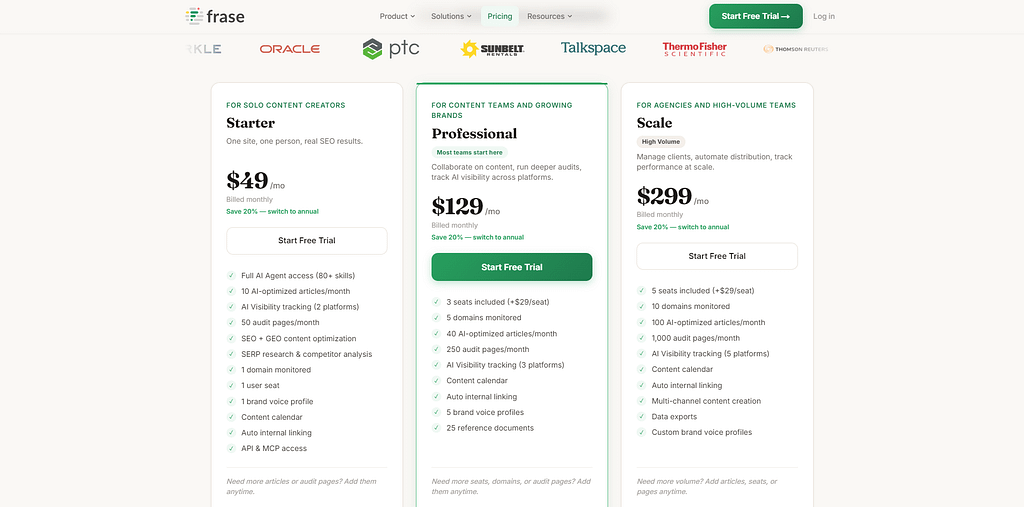
Frase strengths include low entry pricing, fast brief creation, community research, and small-team usability. Frase limitations include no backlink analysis, limited rank tracking, low AI writing quota without AI Pro, and extra user-seat pricing. The Frase review and Frase vs Surfer SEO comparison fit teams choosing between briefs and live optimization.
6. Clearscope - Best for Editorial Content Grading
Clearscope is an editorial content optimization platform that grades drafts, suggests NLP terms, and supports writer-friendly optimization workflows.
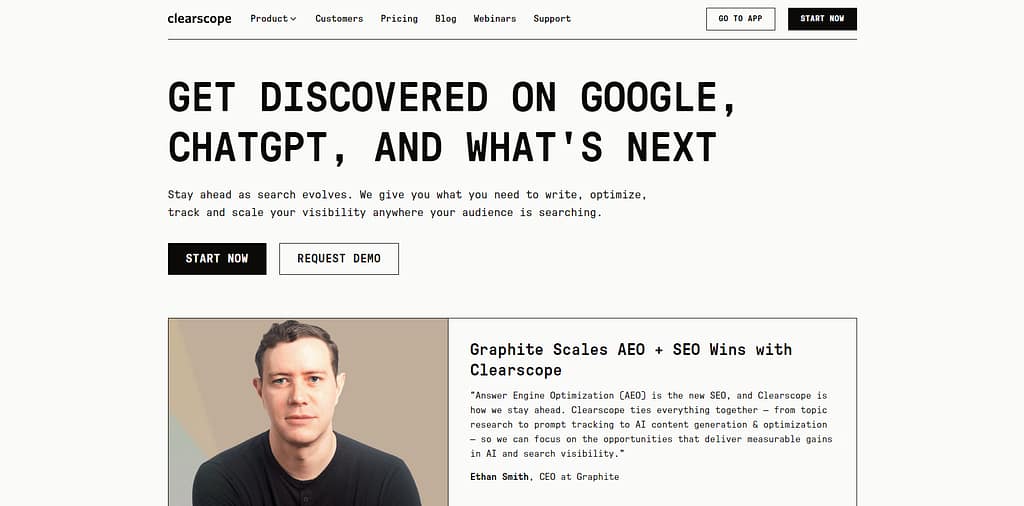
Competitor analysis shows Clearscope in Rankability, eesel AI, and Whatagraph coverage. OneLittleWeb also cites Clearscope-style review data and content optimization comparisons. Clearscope's core value is editorial clarity: writers receive terms, relevance signals, and grading feedback without navigating a broad SEO suite.
Clearscope's 4 optimization functions are:
- Grades content using a simple editorial score.
- Suggests related terms from top-ranking SERP content.
- Supports Google Docs and content team workflows.
- Improves page-level topical coverage before publication.
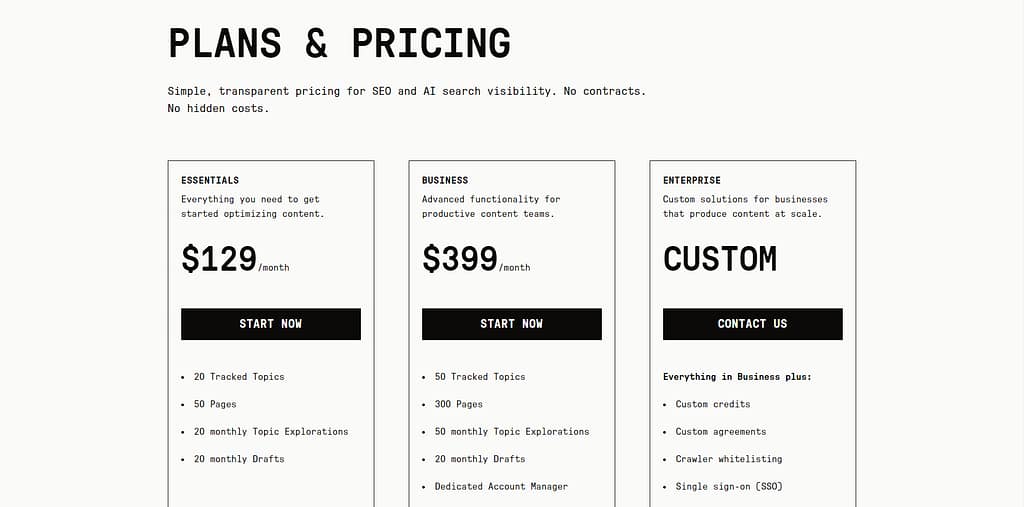
Clearscope strengths include clean editorial usability, strong content grading, and adoption by content teams. Clearscope limitations include vendor-specific pricing, limited technical SEO, limited backlink research, and lower workflow breadth than Semrush or Ahrefs. The Clearscope review and Clearscope vs Surfer SEO comparison fit editorial teams choosing content grading software.
7. Rankability - Best for Agency Content Quality Monitoring
Rankability is an agency-focused AI SEO content optimization platform built around content quality, NLP/entity guidance, and AI search readiness.
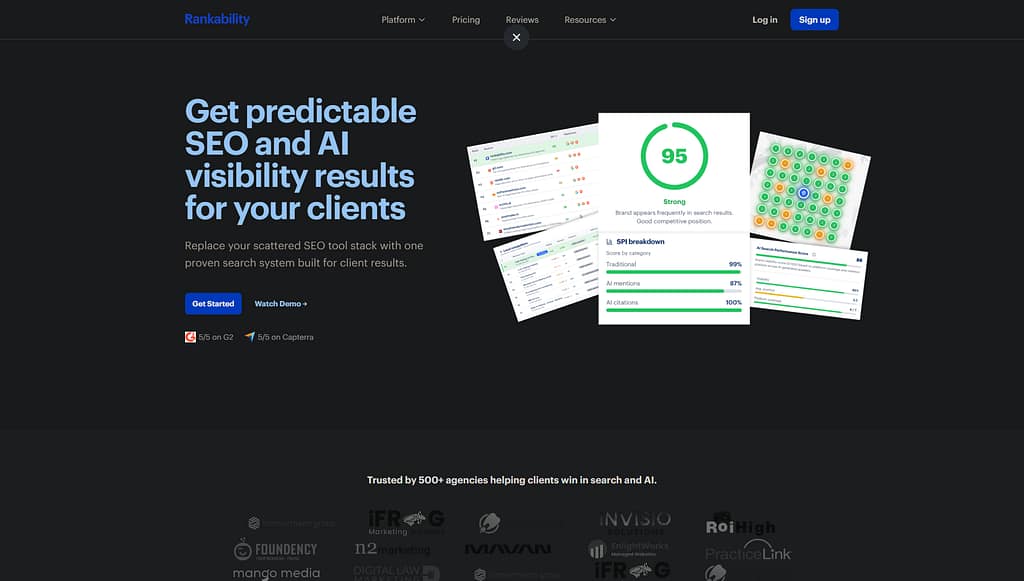
The extracted Rankability competitor page lists Rankability as a daily-use content optimizer and positions Rankability beside Surfer SEO, Clearscope, Frase, MarketMuse, Semrush AI Toolkit, SE Ranking, Ahrefs, Scalenut, Writesonic, AirOps, and Profound. Rankability uses tested-tool framing and emphasizes price-to-value evaluation.
Rankability's 4 content workflow functions are:
- Optimizes drafts through entity and NLP term guidance.
- Scores content quality for agency production workflows.
- Supports AI search readiness through topic coverage.
- Fits client content operations that require repeatable editorial checks.
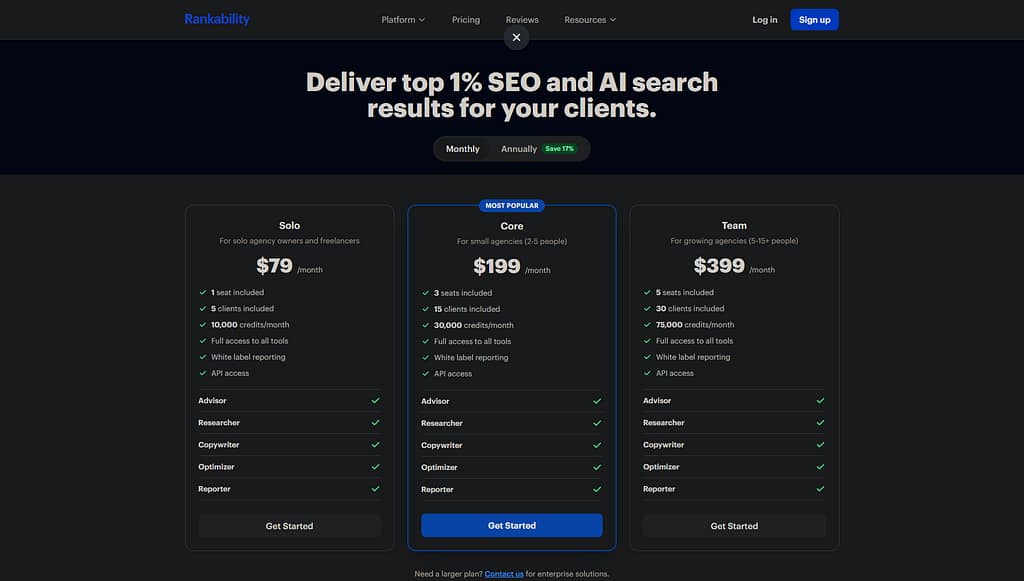
Rankability strengths include agency positioning, focused content quality monitoring, and strong topical alignment with AI SEO searches. Rankability limitations include a smaller third-party review footprint than Semrush or Ahrefs, fewer all-in-one database features, and less public pricing coverage than established suites. The Rankability review and content optimization tools article fit agency content teams.
8. MarketMuse - Best for Content Strategy and Topical Authority
MarketMuse is a content strategy and topical authority platform for content inventory, topic modeling, competitive content gaps, and editorial planning.
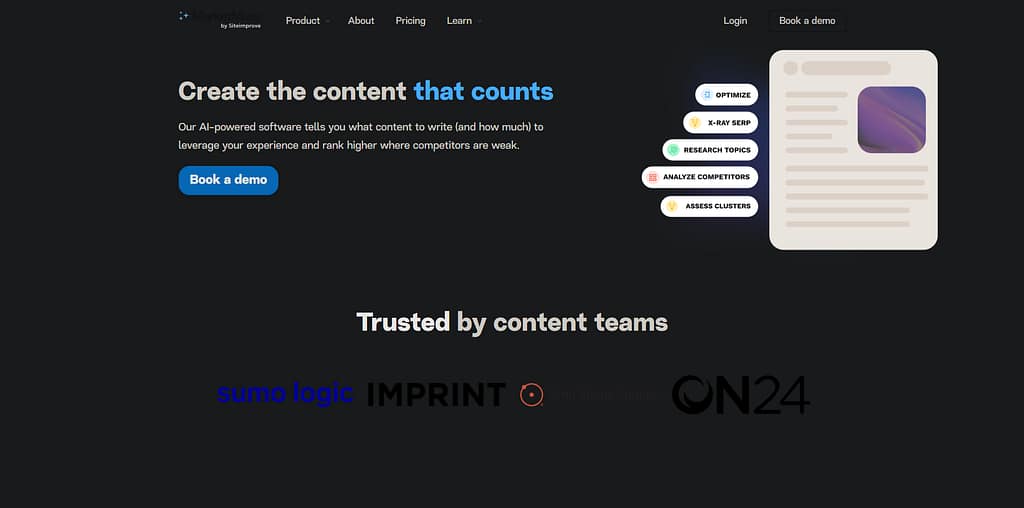
MarketMuse appears in the SERP entity map and in Rankability and Freddie Chatt competitor coverage. MarketMuse fits strategy teams that manage existing content portfolios, not only single-draft optimization. MarketMuse is strongest when content teams map topical authority across clusters before assigning briefs.
MarketMuse's 4 planning functions are:
- Audits content inventory for gaps and underperforming assets.
- Models topics and related entities across content clusters.
- Prioritizes content opportunities by authority and difficulty.
- Guides editorial teams through strategic brief planning.
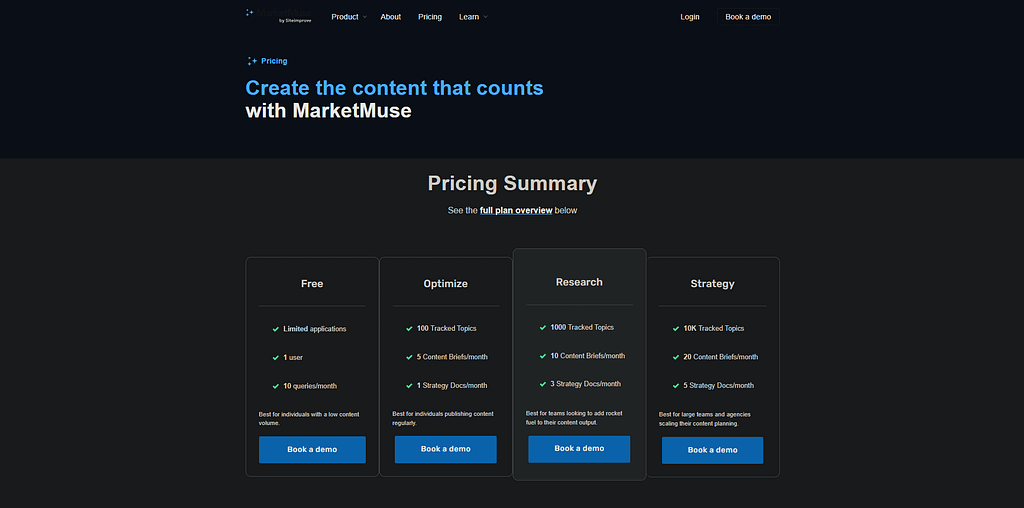
MarketMuse strengths include topical authority planning, content inventory analysis, and enterprise editorial workflows. MarketMuse limitations include higher complexity, slower setup, limited direct technical SEO, and vendor-specific pricing. The MarketMuse review and content optimization tools article fit enterprise content teams.
What Are the Best AI SEO Writing Tools?
There are 2 best AI SEO writing tools in this category: Scalenut and Writesonic. AI SEO writing tools create drafts, briefs, clusters, metadata, and GEO recommendations, but editorial review still verifies facts, sources, entity coverage, and search intent.
The following table compares the 2 AI SEO writing tools by writing workflow, GEO feature, starting price, and best fit.
| Tool | Writing Workflow | GEO Feature | Starting Price | Best Fit |
|---|---|---|---|---|
| Scalenut |
Cruise Mode, Keyword Planner, AI Writer
|
GEO Watchtower and Brand Monitor | ~$24/mo billed annually | Bloggers and small content teams |
| Writesonic |
AI Article Writer, SEO AI Agent, Content Optimizer
|
GEO dashboard, AI Bot Analytics, AI Search Score | ~$79/mo billed annually | GEO-led content production |
AI writing tools differ from content writing tools because AI SEO writing tools connect article generation with keyword clusters, search intent, and AI search visibility signals. AI human review remains central for factual accuracy and brand voice, which connects this category to AI humanizer tools.
9. Scalenut - Best for AI Articles and Keyword Clusters
Scalenut is an AI SEO writing platform that combines keyword clustering, content briefs, AI article generation, optimization, and GEO visibility features.
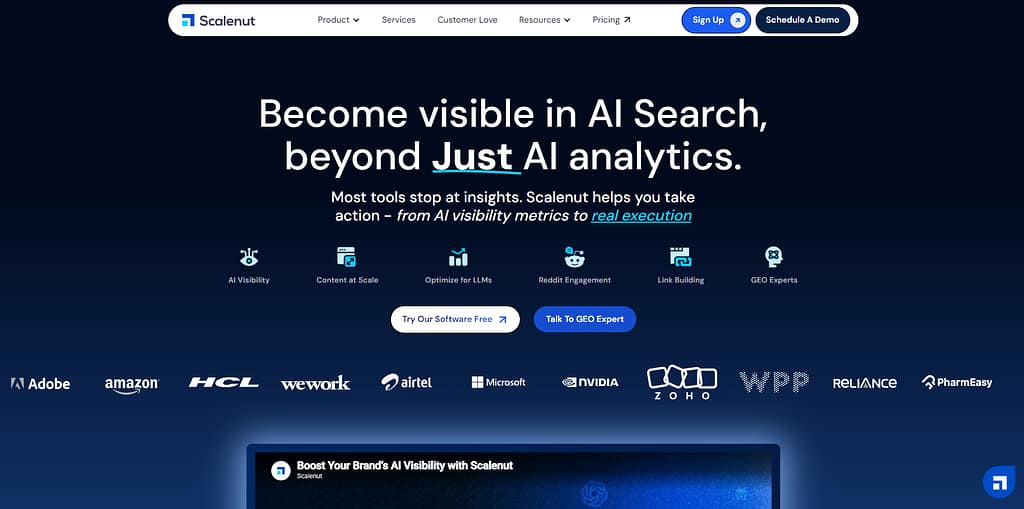
According to the Scalenut tool database updated on 11-03-2026, Scalenut was founded in 2020 and is headquartered in Gurugram, India. Scalenut pricing starts around $24/mo billed annually for Essential, with Plus around $36/mo and Pro around $80/mo. Essential includes 100,000 AI words, 10 SEO articles, 10 keyword clusters, and 10 audit/optimize pages per month.
Scalenut's 5 AI SEO writing functions are:
- Generates long-form articles through Cruise Mode.
- Clusters keywords through Keyword Planner and Cluster Booster.
- Optimizes existing content through Content Optimizer and Audit.
- Tracks AI visibility through GEO Watchtower, Brand Monitor, and AI Traffic Monitor.
- Publishes through WordPress and Shopify integrations.
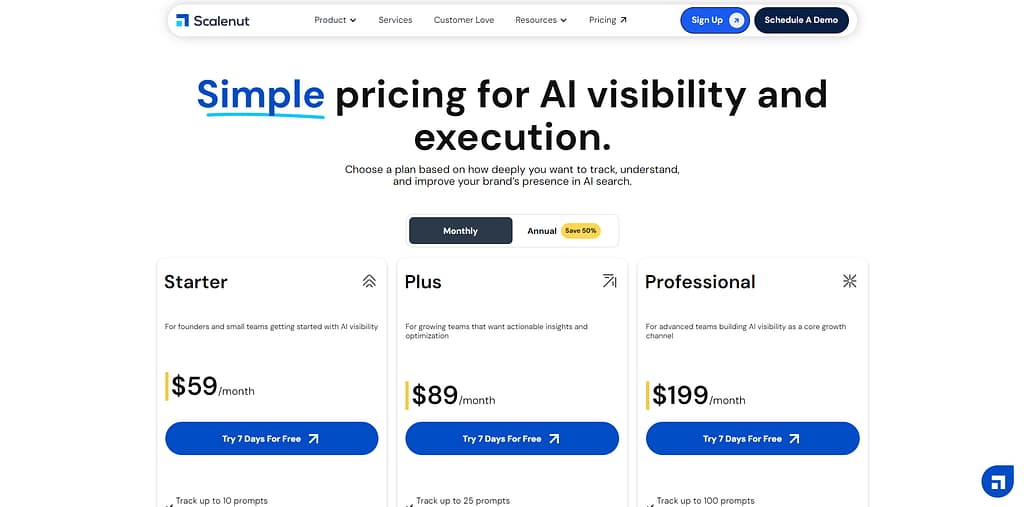
Scalenut strengths include low annual entry pricing, keyword clusters, AI article workflows, and GEO visibility modules. Scalenut limitations include content-first scope, limited backlink intelligence, and added seat costs. The Scalenut review and Scalenut vs Writesonic comparison fit budget-conscious content teams.
10. Writesonic - Best for GEO and AI Content Production
Writesonic is an AI content and GEO platform that combines AI article generation, SEO checking, content gap analysis, AI topic clustering, and AI search visibility tracking.
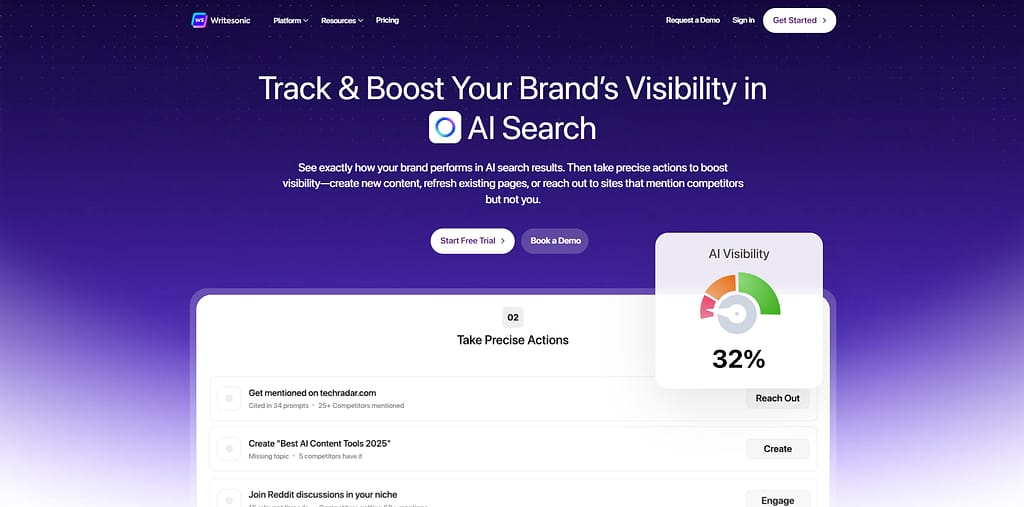
According to the Writesonic tool database updated on 11-03-2026, Writesonic Inc. was founded in 2021 and is headquartered in San Francisco, California. Writesonic pricing starts around $79/mo billed annually for Starter, with Basic around $199/mo and Growth around $399/mo. Writesonic supports GPT-4o, GPT-4, Claude 3.5, Gemini, 24+ languages, and a 120M+ chat query database.
Writesonic's 5 AI SEO production functions are:
- Generates articles through AI Article Writer and guided workflows.
- Optimizes existing drafts through Content Optimizer and SEO Checker.
- Tracks GEO visibility through AI Search Score, citation frequency, and brand mention trends.
- Monitors AI crawler activity through AI Bot Analytics.
- Builds topic clusters for topical authority planning.
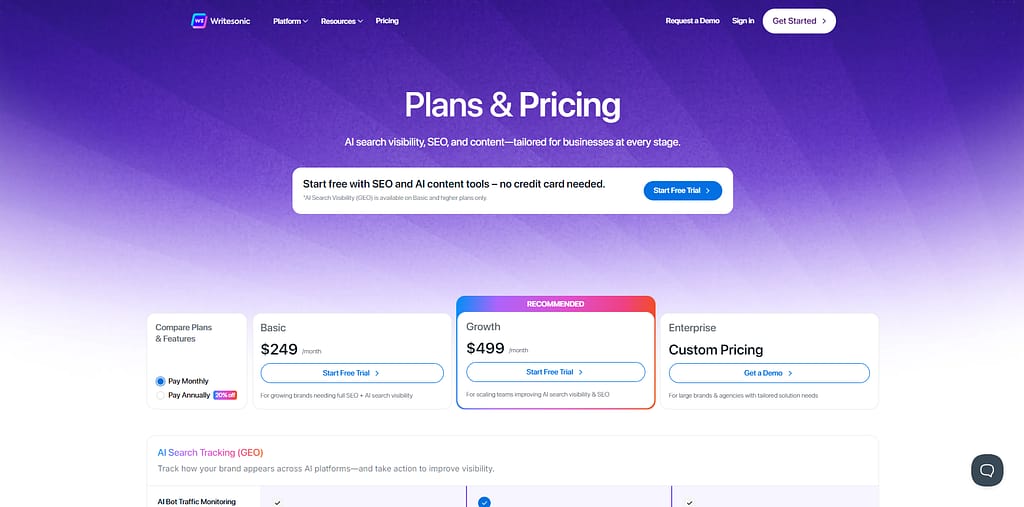
Writesonic strengths include GEO positioning, AI writing volume, chatbot/search integrations, and AI crawler visibility. Writesonic limitations include limited GEO tracking on lower tiers, weaker technical SEO depth, and fact-checking requirements for generated content. The Writesonic review and Writesonic vs Scalenut comparison fit teams prioritizing AI search visibility.
What Are the Best AI SEO Automation Tools?
There are 3 best AI SEO automation tools in this category: AirOps, Search Atlas, and Alli AI. These tools automate repeatable SEO work such as content refreshes, programmatic pages, sitewide on-page changes, AI visibility analysis, and operational workflows.
The following table compares 3 AI SEO automation tools by automation type, data inputs, starting price, and best fit.
| Tool | Automation Type | Data Inputs | Starting Price | Best Fit |
|---|---|---|---|---|
| AirOps |
Workflow chains, grids, content operations
|
Semrush, GSC, data warehouses, knowledge bases | Free/PAYG; paid custom | Agencies and enterprise content ops |
| Search Atlas |
AI SEO automation and site mapping
|
Site, content, technical SEO data | Vendor pricing | Teams replacing multiple SEO tools |
| Alli AI |
On-page automation
|
Site crawl and page rules | Vendor pricing | Bulk on-page deployment |
Automation tools differ from content generators because automation tools change process speed and execution scale. The SEO automation tools and agency SEO tools pages fit teams comparing execution systems.
11. AirOps - Best for AI SEO Workflow Automation
AirOps is an AI workflow automation platform for programmatic SEO, content operations, AI search visibility, and AI model workflow chaining.
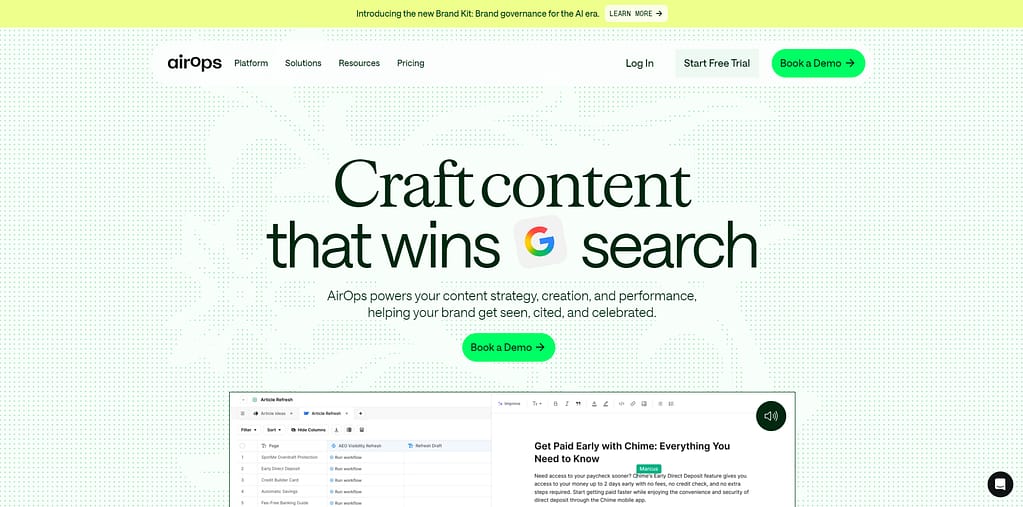
According to the AirOps tool database updated on 11-03-2026, AirOps Inc. was founded in 2022 and is headquartered in Miami, Florida. AirOps includes a limited free/PAYG tier with 20,000 tasks per month, 30+ AI models, 5 knowledge-base sources, and 1 brand kit. Paid Scale and Enterprise pricing is custom.
AirOps' 5 automation functions are:
- Chains AI models through no-code workflow steps.
- Processes content refreshes and programmatic SEO through Grids.
- Measures AI search visibility through Page360 and AI Search Score.
- Identifies citation gaps for ChatGPT, Perplexity, and AI answer engines.
- Publishes content through WordPress, Webflow, Contentful, Strapi, and Shopify integrations.
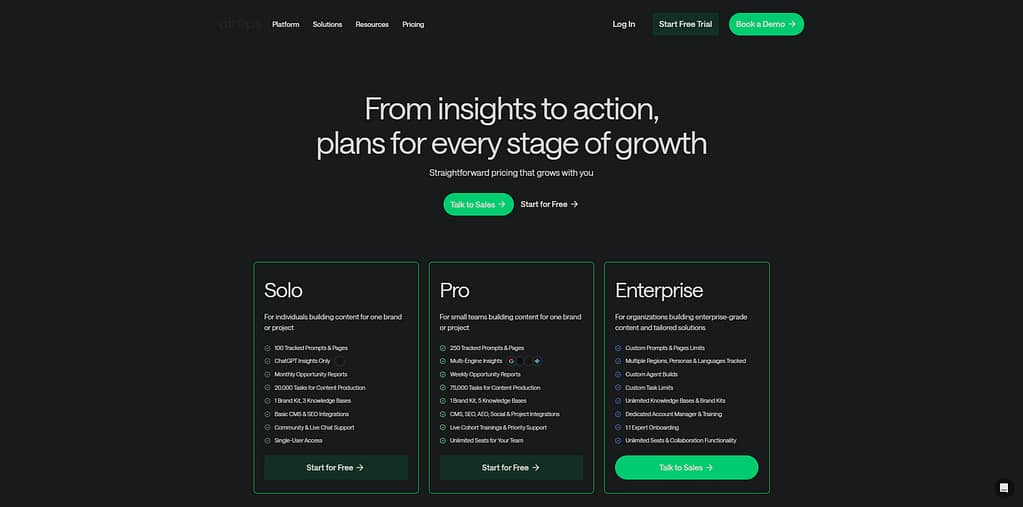
AirOps strengths include workflow automation, content operations, AI visibility scoring, and CMS publishing. AirOps limitations include technical setup, custom pricing for teams, and dependency on existing SEO data inputs. The AirOps review and AirOps vs Writesonic comparison fit operations-led SEO teams.
12. Search Atlas - Best for AI SEO Automation and Site Mapping
Search Atlas is an AI SEO automation platform for content workflows, site mapping, technical SEO, and all-in-one optimization tasks.
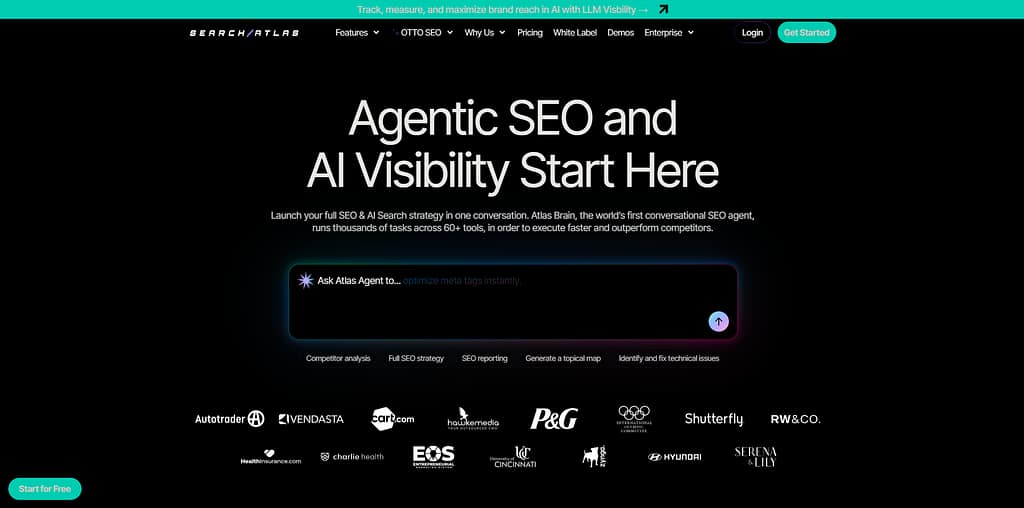
The SERP analysis lists Search Atlas in the AI Overview and entity map under all-in-one platforms and SEO automation. OneLittleWeb also positions Search Atlas as an affordable Ahrefs/Semrush alternative. Search Atlas fits teams searching for broad automation rather than a single content scoring or keyword database workflow.
Search Atlas' 4 AI SEO automation functions are:
- Maps site structure and optimization opportunities.
- Automates content and on-page SEO workflows.
- Supports technical SEO analysis and recommendations.
- Combines multiple SEO tasks inside one vendor platform.
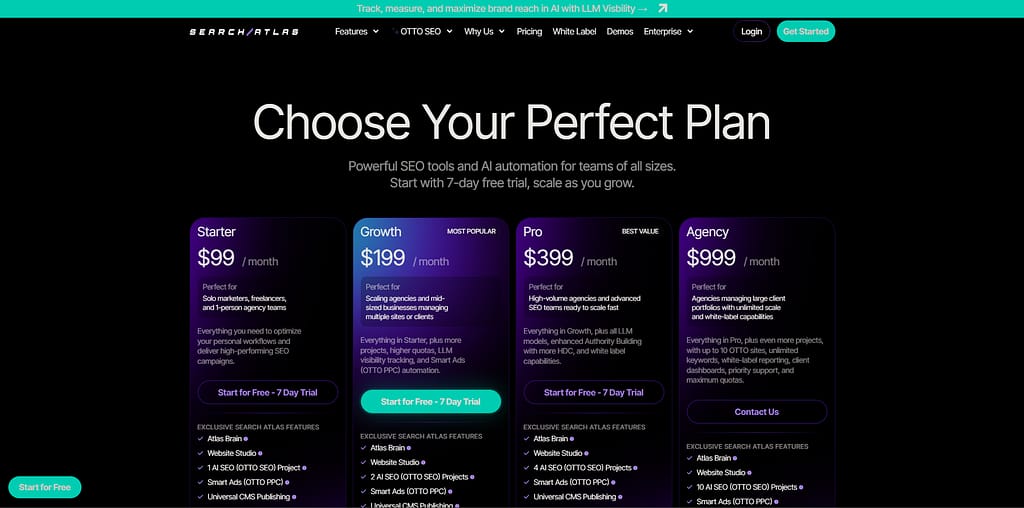
Search Atlas strengths include broad workflow positioning, AI automation, and all-in-one replacement intent. Search Atlas limitations include less independent pricing data, vendor-led SERP presence, and pricing that varies by package. The Search Atlas review and technical SEO toolsarticle fit buyers evaluating automation breadth.
13. Alli AI - Best for On-Page SEO Automation
Alli AI is an on-page SEO automation tool for deploying optimization changes across website pages at scale.
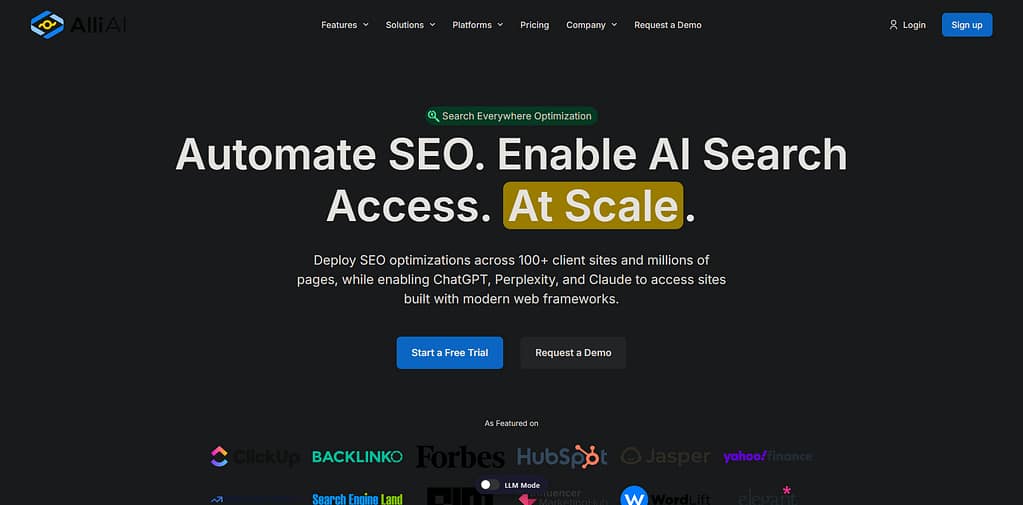
The SERP analysis places Alli AI under SEO automation tools and associates Alli AI with on-page automation. Alli AI fits teams that already know the target on-page changes and require faster deployment across templates, URLs, and content sections.
Alli AI's 4 automation functions are:
- Detects on-page SEO improvement opportunities across existing pages.
- Applies sitewide page optimizations through automation rules.
- Supports bulk changes for titles, descriptions, links, and content elements.
- Speeds repeated implementation tasks for SEO teams with many URLs.
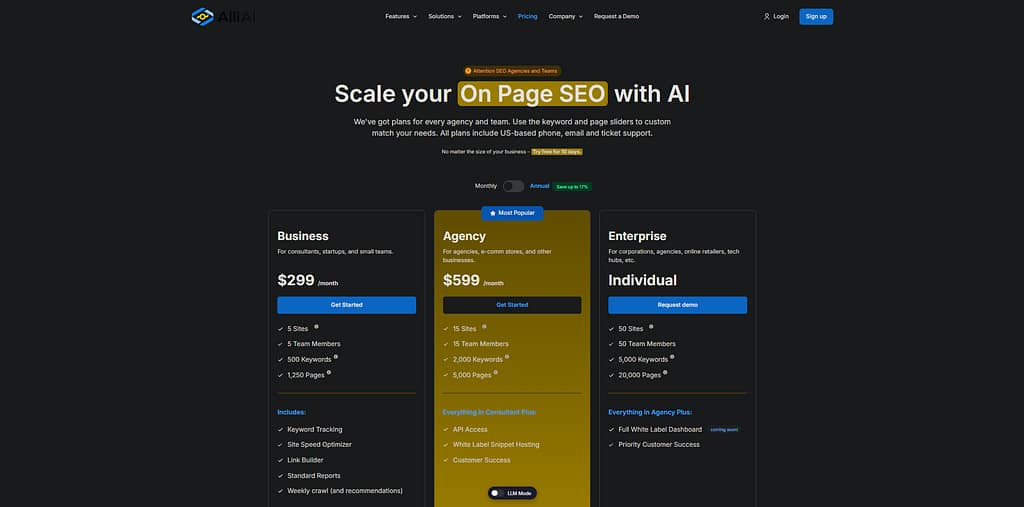
Alli AI strengths include on-page deployment speed, bulk optimization, and automation focus. Alli AI limitations include weaker database coverage than Semrush or Ahrefs, no primary backlink intelligence, and a need for human approval before sitewide changes. The Alli AI review and on-page SEO tools article fit implementation-led SEO teams.
What Are the Best Free AI SEO Tools?
There are 3 best free AI SEO tools in this category: Google Search Console, Ubersuggest, and AnswerThePublic. Free tools provide baseline data, question discovery, and early keyword research before paid AI SEO platforms become cost-effective.
The following table compares 3 free or limited-access tools by function, free limit, upgrade path, and best fit.
| Tool | Free Function | Free Limit | Upgrade Path | Best Fit |
|---|---|---|---|---|
| Google Search Console |
First-party search performance and indexing
|
Verified properties only | No paid tier | Every website |
| Ubersuggest |
Keyword ideas, AI keyword overview, site audit
|
Limited daily usage | Paid SaaS plans | Small businesses |
| AnswerThePublic |
Question, comparison, and topic discovery
|
Limited free searches | Paid SaaS plans | Content ideation |
Google Search Console, Ubersuggest, and AnswerThePublic support a free starter stack. Paid AI SEO tools add competitor data, AI visibility tracking, content scoring, and workflow automation. The open source SEO tools and beginner SEO tools pages fit budget-first teams.
14. Google Search Console - Best Free First-Party SEO Data
Google Search Console is a free Google platform that tracks search performance, indexing, page experience, enhancements, links, and URL inspection data for verified websites.
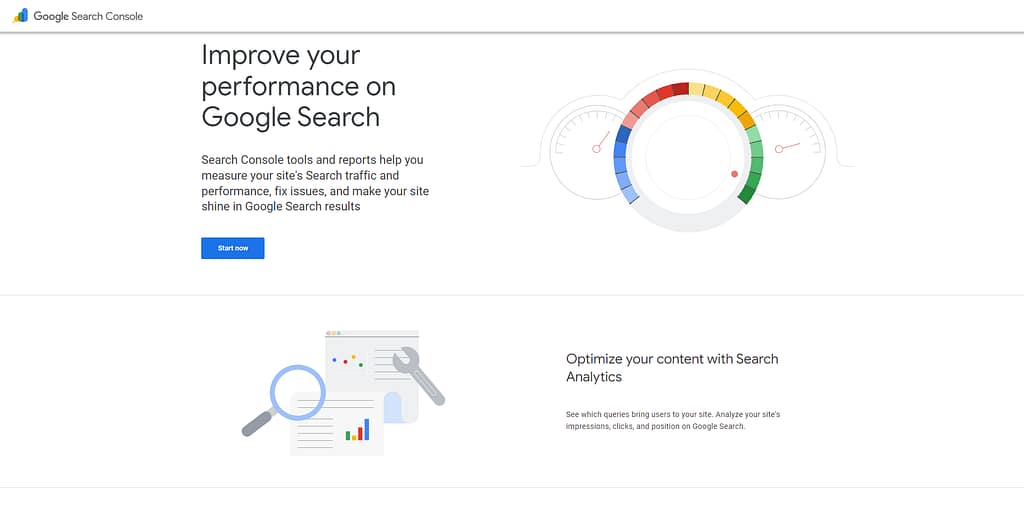
The local Google Search Console tool database maps the core interface: Overview, Performance, URL Inspection, Indexing, Experience, Security and Manual Actions, Links, and Settings. Google Search Console fits AI SEO workflows because Google Search Console validates whether AI-assisted content earns impressions, clicks, CTR, average position, indexing, and Core Web Vitals data.
Google Search Console's 5 free SEO validation functions are:
- Tracks impressions, clicks, CTR, and average position.
- Inspects URLs for indexing and page eligibility.
- Reports Core Web Vitals and page experience.
- Shows indexed and not-indexed page states.
- Lists internal and external links discovered by Google.
Google Search Console strengths include first-party Google data, zero cost, indexing diagnostics, and direct search performance evidence. Google Search Console limitations include no competitor data, no keyword difficulty, no AI Overview tracking, and property verification requirements. The Google Search Console review and Google Search Console vs Google Analytics 4 comparison fit every SEO workflow.
15. Ubersuggest - Best Budget Keyword Research Tool
Ubersuggest is a budget SEO platform for keyword research, AI prompt ideas, competitor analysis, rank tracking, site audits, and content ideas.
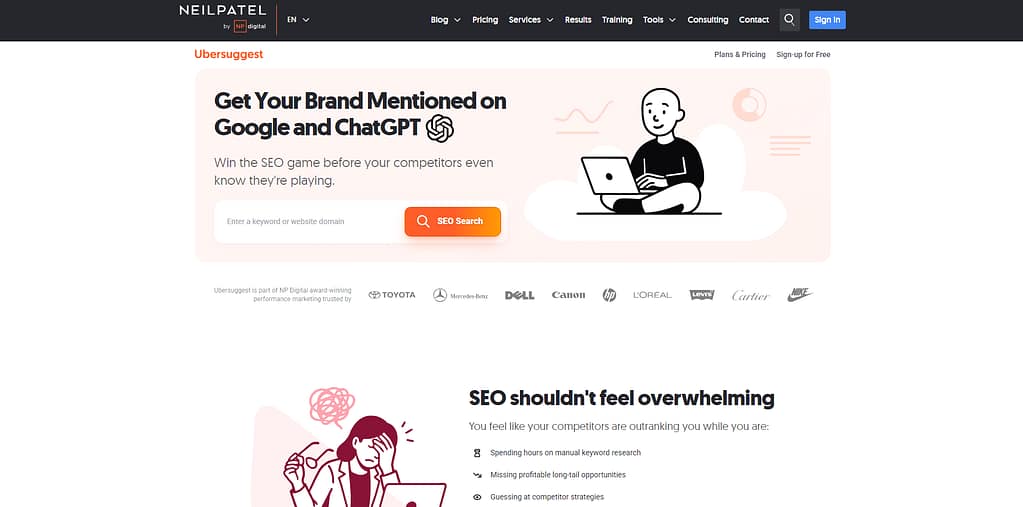
The local Ubersuggest tool database shows AI Search Visibility, AI Keyword Overview, AI Prompt Ideas, Keyword Visualization, Competitive Research, Site Audit, Rank Tracking, and AnswerThePublic access. Ubersuggest fits small businesses and founders that require low-cost keyword discovery before paying for a larger database such as Semrush or Ahrefs.
Ubersuggest's 5 budget SEO functions are:
- Finds keyword ideas through AI Keyword Overview.
- Researches AI prompts and responses through AI Prompt Ideas.
- Audits sites for SEO opportunities and on-page issues.
- Tracks competitor traffic, keywords, and backlinks.
- Connects content ideation through AnswerThePublic.
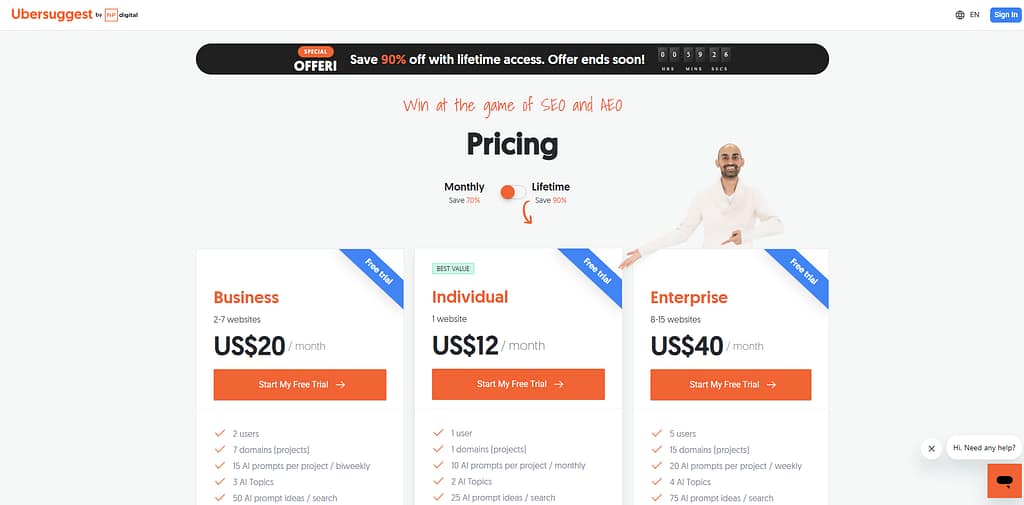
Ubersuggest strengths include beginner accessibility, low-cost positioning, AI keyword views, and integrated content ideas. Ubersuggest limitations include less database depth than Semrush or Ahrefs, limited free usage, and pricing that varies by account and plan. The Ubersuggest review and cheap SEO tools article fit budget-first teams.
16. AnswerThePublic - Best for AI-Assisted Question Research
AnswerThePublic is a question research platform that surfaces search, social, shopping, and AI-model question patterns for content planning.
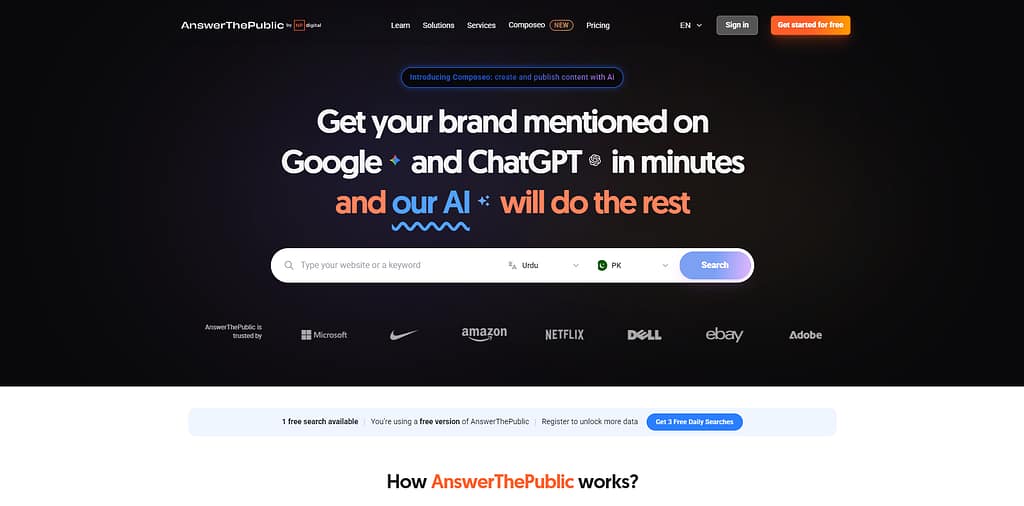
The local AnswerThePublic tool database shows question, preposition, comparison, alphabetical, number, related-term, social media, shopping, and AI model sentiment categories. AnswerThePublic fits AI SEO because prompt-style search and PAA coverage both depend on question networks.
AnswerThePublic's 5 question research functions are:
- Groups questions by who, what, why, when, where, and how intent.
- Surfaces prepositions and comparisons for long-tail content briefs.
- Maps alphabeticals and numbers for topical expansion.
- Adds AI model sentiment filters across positive, neutral, and negative angles.
- Supports FAQ and PAA planning for answer-first sections.
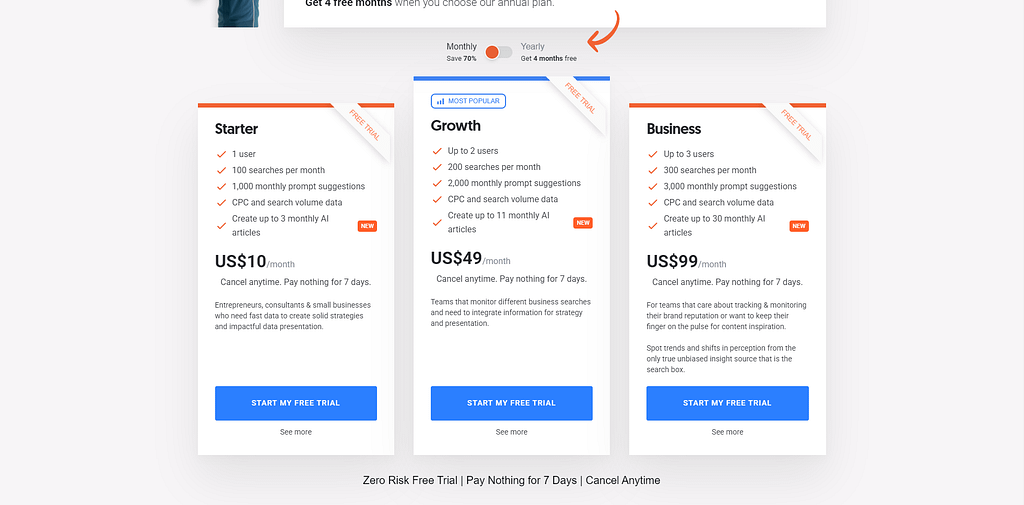
AnswerThePublic strengths include question discovery, content ideation, and PAA-style coverage. AnswerThePublic limitations include no rank tracking, no backlink data, no technical audit, and plan-dependent export limits. The AnswerThePublic review and keyword research tools page fit content planners.
Which AI SEO Tool Stack Fits Each Workflow?
The right AI SEO tool stack depends on the workflow bottleneck, not the tool's overall popularity. Content teams prioritize briefs and optimization, agencies prioritize reporting and repeatable workflows, and startups prioritize low-cost validation.
The following table maps workflows to recommended AI SEO stacks and limitations.
| Workflow | Recommended Stack | Why This Stack Fits | Main Limitation |
|---|---|---|---|
| Content optimization |
Surfer SEO + Frase + Google Search Console
|
SERP scoring, briefs, and first-party validation | Limited backlink and technical SEO depth |
| Keyword research |
Semrush + Ahrefs + AnswerThePublic
|
Database depth, backlinks, and question coverage | Higher monthly cost |
| AI writing |
Scalenut + Writesonic + Frase
|
Drafting, GEO, and brief workflows | Human editing remains required |
| AI search visibility |
SE Ranking + Semrush + Writesonic + AirOps
|
AI Overview, brand mentions, AI bot analytics, citation gaps | Platform coverage varies by vendor |
| SEO automation |
AirOps + Search Atlas + Alli AI
|
Workflow chaining, site mapping, and on-page deployment | Setup complexity and vendor pricing |
| Free starter stack |
Google Search Console + Ubersuggest + AnswerThePublic
|
First-party data, budget keyword research, question discovery | No deep competitor or AI visibility data |
Which AI SEO Tools Are Best for Agencies?
The 5 best AI SEO tools for agencies are Semrush, SE Ranking, AirOps, Surfer SEO, and Google Search Console. Semrush covers competitive research and reporting. SE Ranking covers multi-project rank tracking and AI Results Tracker. AirOps handles repeatable workflows and content operations. Surfer SEO standardizes content optimization across writers. Google Search Console validates client performance with first-party data. Agencies comparing SEO tools for agencies and the Semrush review get the strongest fit from this stack.
Which AI SEO Tools Are Best for Startups?
The 5 best AI SEO tools for startups are Google Search Console, Ubersuggest, Frase, Scalenut, and AnswerThePublic. Google Search Console validates whether pages get indexed. Ubersuggest provides budget keyword discovery. Frase produces briefs at low entry cost. Scalenut combines keyword clusters and AI article workflows. AnswerThePublic maps questions for early topical coverage. Startups comparing small business SEO tools and cheap SEO tools get the lowest-cost entry from this stack.
Which AI SEO Tools Are Best for Content Teams?
The 5 best AI SEO tools for content teams are Surfer SEO, Frase, Clearscope, MarketMuse, and Writesonic. Surfer SEO scores drafts. Frase creates briefs. Clearscope supports editorial grading. MarketMuse plans topical authority. Writesonic generates AI drafts and GEO recommendations. Content teams comparing content optimization tools and content writing tools get the strongest editorial coverage from this stack.
What Do AI SEO Tools Cost?
AI SEO tools cost $0 to custom enterprise pricing, depending on data depth, AI visibility tracking, content credits, automation volume, and reporting requirements. Google Search Console is free. SE Ranking starts around $103/mo billed annually. Semrush and Ahrefs start above $117/mo billed annually. AirOps, Search Atlas, Alli AI, MarketMuse, Clearscope, and Rankability require vendor verification for final buyer pricing.
The following table compares 10 AI SEO tools across free access, starting price, mid-tier price, and best budget fit.
| Tool | Free Plan | Starting Price | Mid Tier | Best Budget Fit |
|---|---|---|---|---|
| Google Search Console |
Yes
|
$0 | $0 | Every website |
| AirOps |
Limited/PAYG
|
$0 limited | Custom | Teams testing automation |
| Frase |
No
|
~$49/mo annually | ~$129/mo annually | Brief-first teams |
| Scalenut |
No
|
~$24/mo annually | ~$36/mo annually | AI writing teams |
| Writesonic |
Limited
|
~$79/mo annually | ~$199/mo annually | GEO content teams |
| SE Ranking |
No
|
~$103/mo annually | ~$233/mo annually | Value-focused SEO teams |
| Surfer SEO |
No
|
~$99/mo annually | ~$182/mo annually | Content optimization teams |
| Ahrefs |
Webmaster Tools only
|
~$129/mo annually | ~$249/mo annually | Backlink-led teams |
| Semrush |
Freemium limits
|
~$117.33/mo annually | ~$208.33/mo annually | Full-stack SEO teams |
| Clearscope |
Not listed
|
Vendor pricing | Vendor pricing | Editorial teams |
Frase, Scalenut, and Writesonic offer lower entry prices than Semrush or Ahrefs because content generation and brief workflows require less database infrastructure than backlink indexes. Semrush and Ahrefs cost more because Semrush and Ahrefs include large proprietary keyword and backlink databases. Buyers comparing cheap SEO tool and paid SEO tools get clearer value by matching tool spend to workflow bottlenecks.
What Are the Limits of AI SEO Tools?
AI SEO tools have 6 major limits: factual accuracy, source quality, duplicate workflows, pricing creep, data-source limits, and implementation risk. AI SEO tools accelerate repeated SEO tasks, but AI SEO tools do not remove expert review.
- Require human review for facts, citations, expert claims, and legal/medical/financial statements.
- Miss context when prompts, source inputs, or competitor sets are incomplete.
- Depend on external data sources such as Google Search Console, keyword databases, and SERP snapshots.
- Overlap heavily when teams buy multiple tools with similar brief, writing, or scoring features.
- Inflate costs through AI credits, add-ons, seats, crawl limits, and prompt tracking tiers.
- Need approval before automated on-page changes affect titles, internal links, schema, or production pages.
AI detectors and humanizers sit outside core SEO software, but AI detector tools and AI humanizer tools become relevant when content teams manage AI-assisted publishing at scale.
What Are the Most Common Questions About AI SEO Tools?
These answers cover the highest-intent FAQ patterns from the SERP analysis, query network, and competitor research. Each answer gives a direct recommendation by workflow, budget, or visibility use case.
What Is the Best AI SEO Tool Overall?
Semrush is the best overall AI SEO tool for full-stack teams; Surfer SEO is the best content optimization tool; SE Ranking is the best value suite.
Semrush covers keyword research, AI visibility, competitor analysis, technical audits, content workflows, and reporting. Surfer SEO covers SERP-based content optimization with 500+ ranking factors. SE Ranking covers daily rank tracking and AI Results Tracker at a lower entry cost. The Semrush review and Surfer SEO review fit buyers comparing top category picks.
What Is the Best Free AI SEO Tool?
Google Search Console is the best free AI SEO companion because Google Search Console validates impressions, clicks, CTR, indexing, page experience, and query performance for AI-assisted content.
Google Search Console does not replace Semrush, Ahrefs, or Surfer SEO because Google Search Console lacks competitor data and AI search visibility tracking. Google Search Console remains the baseline validation tool for every AI SEO stack. The Google Search Console review and open source SEO tools page fit free-tool research.
Can AI SEO Tools Replace SEO Professionals?
AI SEO tools do not replace SEO professionals because search intent, factual verification, technical diagnosis, and editorial judgment require human review.
AI SEO tools reduce repeated work such as brief generation, clustering, first-draft writing, content scoring, rank reporting, and AI visibility monitoring. SEO professionals still interpret tradeoffs, validate claims, choose strategy, and approve implementation. Agencies comparing SEO tools for agencies and technical SEO tools get the clearest division between automation and expertise.
Which AI SEO Tools Track ChatGPT and AI Overview Visibility?
SE Ranking, Semrush, Ahrefs, Writesonic, Scalenut, AirOps, and Surfer SEO include AI search visibility or AI answer tracking features.
SE Ranking includes AI Results Tracker. Semrush includes AI Visibility Hub. Ahrefs includes Brand Radar. Writesonic includes GEO dashboard and AI Bot Analytics. Scalenut includes GEO Watchtower. AirOps includes AI Search Score and citation gap analysis. Surfer SEO includes AI Visibility Tracking and AI Tracker on advanced plans. The rank tracking tools page and SE Ranking review fit AI visibility buyers.
Are AI SEO Tools Worth Paying For?
AI SEO tools are worth paying for when the tool removes a measurable workflow cost, such as briefs, optimization, rank tracking, AI visibility tracking, or reporting.
Free tools work for validation and early discovery. Paid tools work when SEO teams publish consistently, track competitors, monitor AI search visibility, or report to clients. A startup stack starts with Google Search Console, Ubersuggest, AnswerThePublic, and Frase. An agency stack adds Semrush, SE Ranking, AirOps, and Surfer SEO. The cheap SEO tools and paid SEO tools pages fit budget comparisons.
Final Verdict: Which AI SEO Tool Stack Should You Choose?
Choose AI SEO tools by workflow, not universal rank. Semrush, Ahrefs, and SE Ranking fit SEO data and competitive research. Surfer SEO, Frase, Clearscope, Rankability, and MarketMuse fit content optimization and topical authority. Scalenut and Writesonic fit AI writing and GEO production. AirOps, Search Atlas, and Alli AI fit automation. Google Search Console, Ubersuggest, and AnswerThePublic fit the free starter stack.
The best AI SEO tools for 2026 combine AI search visibility, content optimization, and workflow-specific evidence. The strongest AI SEO stack pairs one data platform, one content optimization tool, one AI writing or automation tool, and Google Search Console for first-party validation.