
Best App Store SEO Tools: 16 ASO Platforms
There are 16 best App Store SEO tools for ASO keyword research, app ranking tracking, competitor intelligence, review management, creative testing, and store performance measurement. The strongest ASO tools include AppTweak, AppFollow, Appfigures, App Radar, Mobile Action, ASODesk, Sensor Tower, ASO.dev, Appbot, Geeklab, and Gummicube.
App Store SEO tools support App Store Optimization across Apple App Store and Google Play. Web SEO tools track Google rankings, backlinks, and webpages. ASO tools track mobile app keywords, category ranks, store listing metadata, screenshots, icons, reviews, ratings, downloads, and conversion signals.
Quick Verdict: Which App Store SEO Tools Rank Highest?
The highest-ranked App Store SEO tools are AppTweak, AppFollow, Appfigures, Mobile Action, and App Radar because these platforms combine ASO keyword data, competitor monitoring, pricing visibility, review signals, and workflow depth.
The table compares 16 ASO tools by provisional score, best-fit use case, public starting price, rating evidence, and score status.
| # | Tool | Primary Function | Public Entry Price | Trial / Free Access | Best Fit |
|---|
The quick verdict favors AppTweak for full ASO intelligence, AppFollow for review workflows, Appfigures for budget analytics, and Mobile Action for teams that connect organic app keyword data with Apple Search Ads.
How Were App Store SEO Tools Evaluated?
The App Store SEO tools were evaluated with 5 scoring categories: core ASO performance, budget-tier value, interface quality, ecosystem sync, and roadmap velocity. The final scores use the FassihFayyaz.net 100-point framework and Google Search Results Consensus.
All scores are provisional because the folder contains manually collected research, not 14-day live deployment testing notes. Permanent scores require live use across keyword tracking, app metadata monitoring, review workflows, pricing checks, export tests, and support checks.
What Criteria Ranked Each Tool?
There are 5 criteria used to rank each App Store SEO tool, including performance, value, interface quality, ecosystem fit, and product momentum.
| Category | What It Covers |
|---|---|
| Core Performance | Keyword research, rank tracking, competitor monitoring, review data, creative testing, and reporting depth. |
| Budget Value | Free plans, trial length, entry price, seat limits, keyword limits, and upgrade pressure. |
| Interface Quality | Onboarding clarity, dashboard structure, reporting flow, and workflow speed. |
| Ecosystem Sync | App Store Connect, Google Play Console, Slack, Zendesk, Jira, APIs, exports, and paid acquisition connections. |
| Roadmap Velocity | Public product updates, AI features, Apple Ads integration, Google Play support, and enterprise data coverage. |
The ranking weights core performance at 40 points, budget value at 25 points, interface quality at 15 points, ecosystem sync at 10 points, and roadmap velocity at 10 points.
What Testing Status Applies To The Scores?
The score status is provisional for all 16 tools because 14-day live environment testing evidence is absent from the collected folder. Provisional status means the ranking uses official pages, public pricing, review-platform ratings, SERP consensus, and competitor coverage.
Permanent status requires repeated live use across at least 14 days. That rule protects the ranking from pricing-page claims, review-platform bias, and short demo impressions.
What Are App Store SEO Tools?
App Store SEO tools are ASO software platforms that improve app discoverability across Apple App Store and Google Play through keyword research, ranking tracking, metadata analysis, competitor monitoring, review management, and conversion testing.
App Store Optimization differs from web SEO because ASO optimizes app titles, subtitles, keyword fields, short descriptions, screenshots, icons, videos, reviews, ratings, category ranks, and install conversion. Web SEO optimizes webpages, backlinks, crawlability, search snippets, and organic traffic. A related best keyword research tools workflow covers web keyword discovery, while ASO tools focus on app-store keyword behavior.
According to the SERP analysis in this folder, the dominant ASO tool entities are AppTweak, AppFollow, Sensor Tower, Mobile Action, ASODesk, Gummicube, App Radar, App Store Connect, Google Play Console, and Appbot.
What Are The Best All-In-One ASO Platforms?
The best all-in-one ASO platforms are AppTweak, AppFollow, Appfigures, App Radar, Mobile Action, ASODesk, ASOTools.io, and ASO.dev because these tools cover keyword research, app ranking tracking, competitor monitoring, store listing workflows, and review signals.
The table compares all-in-one ASO platforms by primary function, public entry price, trial access, and best-fit user.
| # | Tool | Primary Function | Public Entry Price | Trial / Free Access | Best Fit |
|---|
The all-in-one category overlaps with best competitor analysis tools because ASO competitors expose keywords, metadata changes, category moves, and creative updates.
1. AppTweak – Best Overall ASO Platform
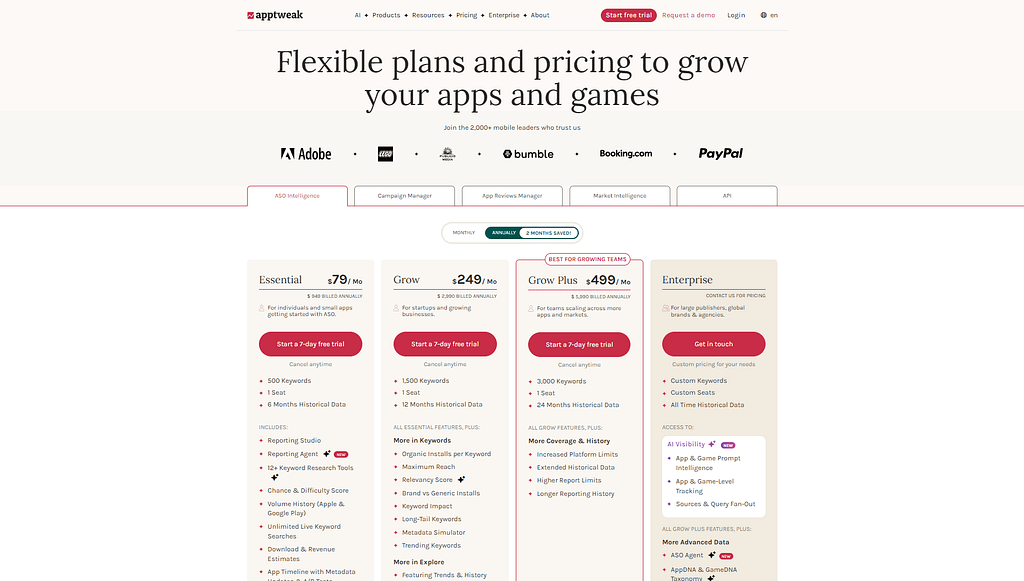
AppTweak is the best overall ASO platform for teams that compare keywords, competitors, Apple Ads data, and app store performance inside one workflow. According to AppTweak Pricing, AppTweak starts at $79/mo and includes a 7-day free trial.
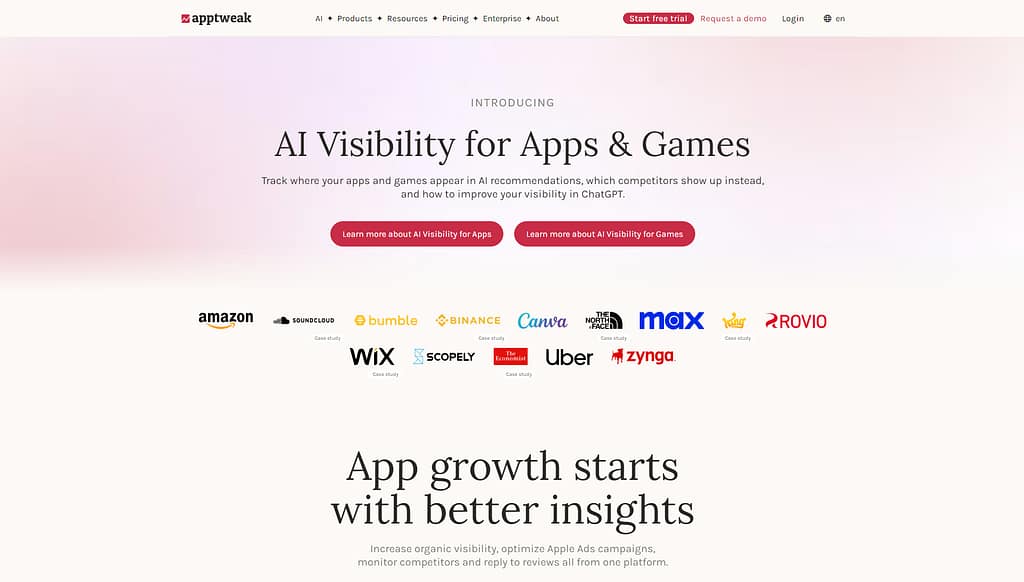
AppTweak tracks keyword rankings, analyzes competitors, audits metadata, compares creatives, monitors reviews, and connects organic ASO with Apple Ads intelligence. According to G2, AppTweak holds a 4.6/5 rating. According to Capterra, AppTweak holds a 4.2/5 rating.
The main AppTweak strengths are keyword depth, competitor visibility, and strategic reporting. The main AppTweak limitations are starter-plan limits, seat limits, keyword-history limits, and lower Capterra rating than AppFollow or ASODesk. A detailed AppTweak review fits deeper feature testing, and AppTweak vs AppFollow fits teams comparing keyword intelligence with review operations.
2. AppFollow – Best For Review Management And ASO Tracking
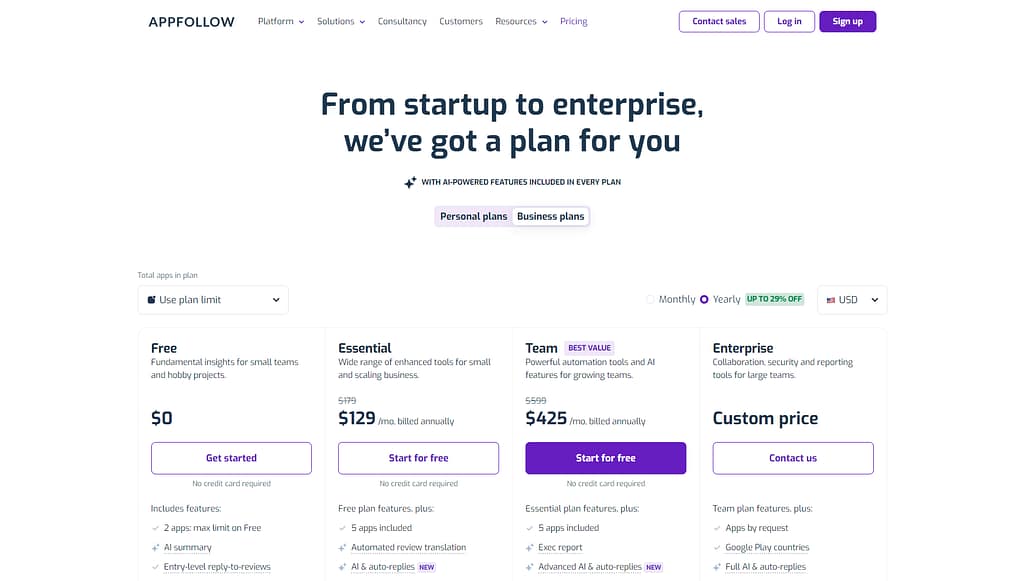
AppFollow is the best ASO platform for review management because AppFollow combines ratings, review replies, sentiment workflows, keyword tracking, and competitor monitoring. According to AppFollow Pricing, AppFollow starts at $129/mo when billed annually and includes a 10-day free trial.
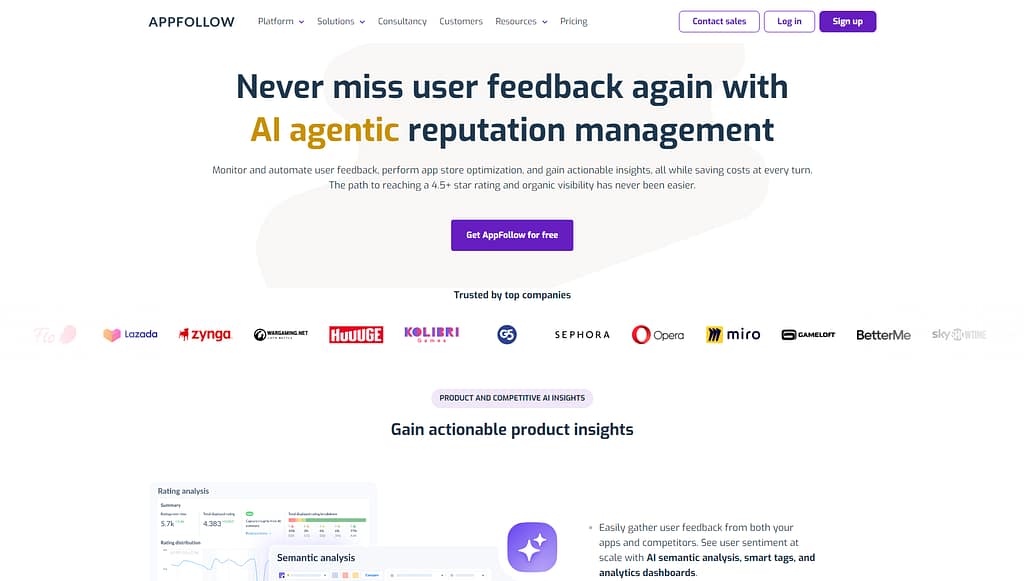
AppFollow monitors app keywords, tracks competitors, manages review replies, connects support channels, and turns user feedback into ASO signals. According to G2 and Capterra, AppFollow holds a 4.6/5 rating on both platforms.
The main AppFollow strengths are review automation, integrations, multilingual review workflows, and reputation monitoring. The main AppFollow limitations are higher entry price than Appfigures or App Radar and public review comments around data accuracy and expense. The AppFollow review fits review-led ASO evaluation, and AppFollow vs AppTweak fits teams comparing review depth with broader keyword intelligence.
3. Appfigures – Best Budget ASO Analytics Tool
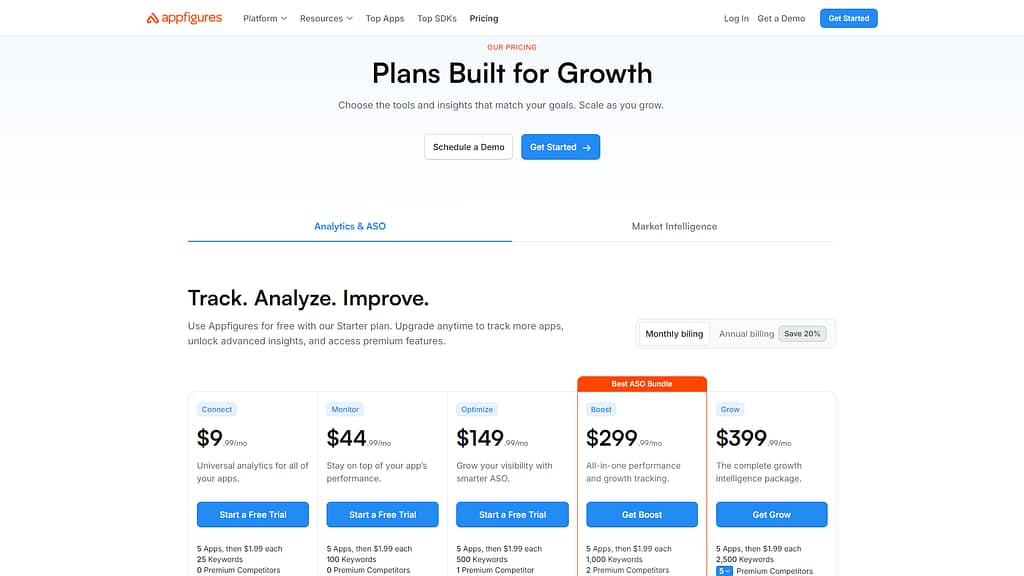
Appfigures is the best budget ASO analytics tool for app teams that track keywords, reviews, downloads, revenue, and competitor movement without enterprise pricing. According to Appfigures Pricing, Appfigures starts at $9.99/mo monthly and $7.99/mo annually.
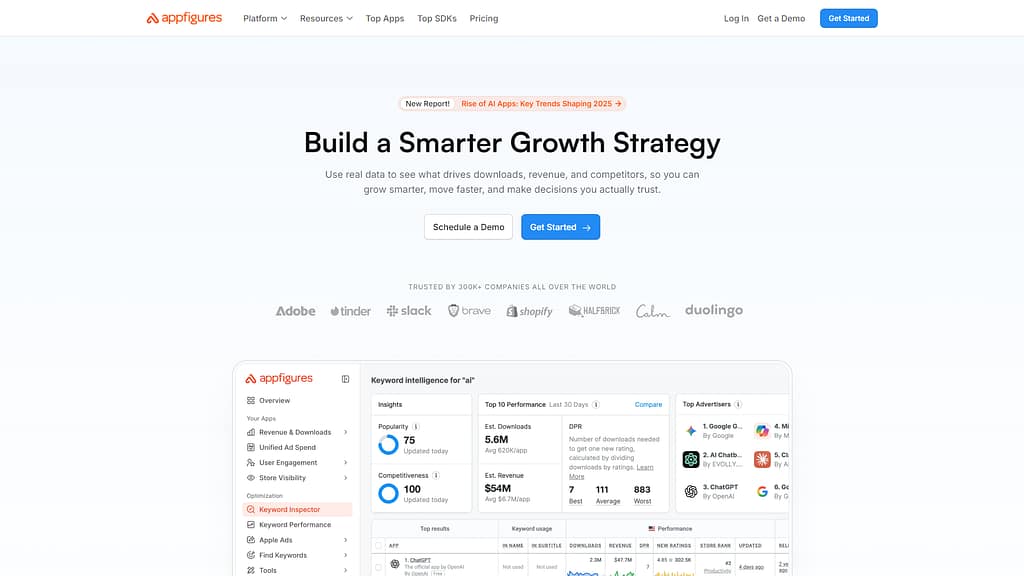
Appfigures provides app analytics, ASO snapshots, keyword tracking, competitor tracking, reviews, download estimates, and revenue estimates. According to G2, Appfigures holds a 4.2/5 rating.
The main Appfigures strengths are low entry cost, broad app analytics, and practical reporting for small portfolios. The main Appfigures limitations are lighter ASO workflow depth than AppTweak, fewer review-automation features than AppFollow, and low-tier limits on ASO capabilities. The Appfigures review fits teams comparing budget analytics against larger ASO suites.
4. App Radar – Best ASO Workflow Tool
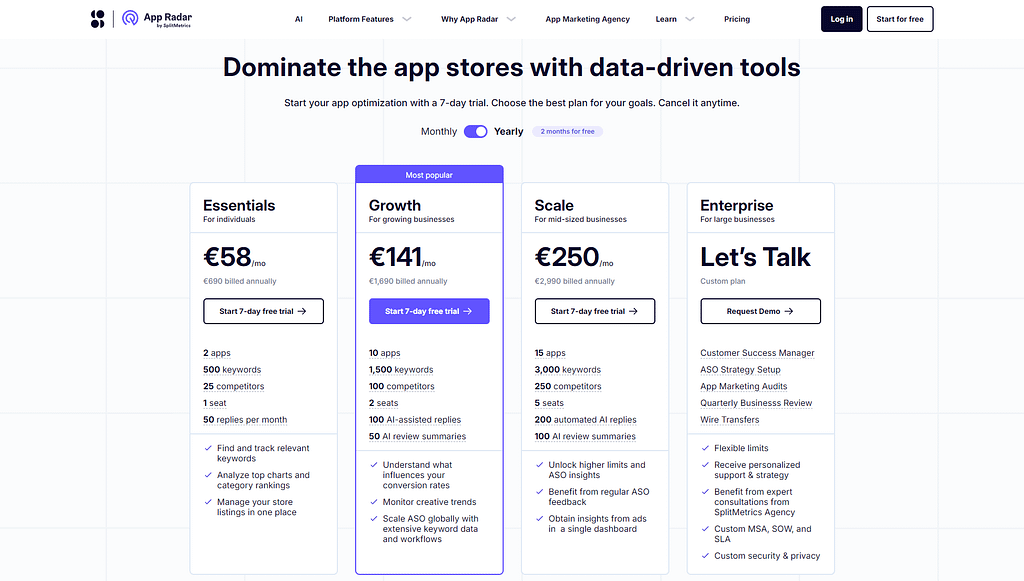
App Radar is the best ASO workflow tool for teams that update app listings, monitor keywords, manage review replies, and maintain store visibility through a guided dashboard. According to App Radar Pricing, App Radar starts at EUR58/mo monthly and includes a 7-day free trial.
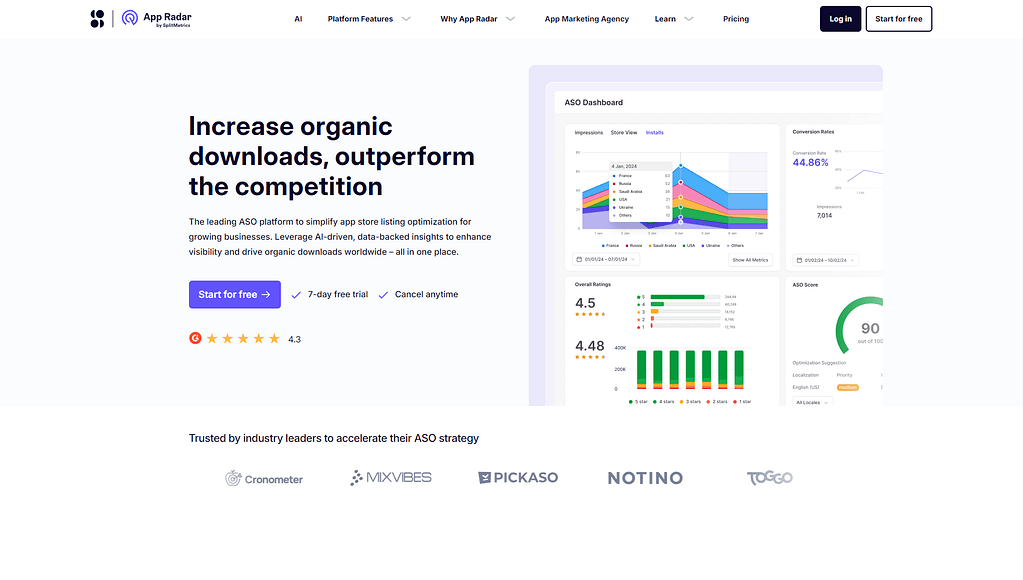
App Radar tracks keywords, monitors top charts, manages store listing updates, compares competitors, and supports review replies. According to G2, App Radar holds a 4.3/5 rating. According to Capterra, App Radar holds a 3.9/5 rating.
The main App Radar strengths are workflow clarity, listing management, and ASO task structure. The main App Radar limitations are app limits, keyword limits, seat limits, reply limits, and weaker public rating evidence than AppTweak or AppFollow. The App Radar review fits teams that prioritize listing operations over enterprise app intelligence.
5. Mobile Action – Best For ASO And Apple Search Ads
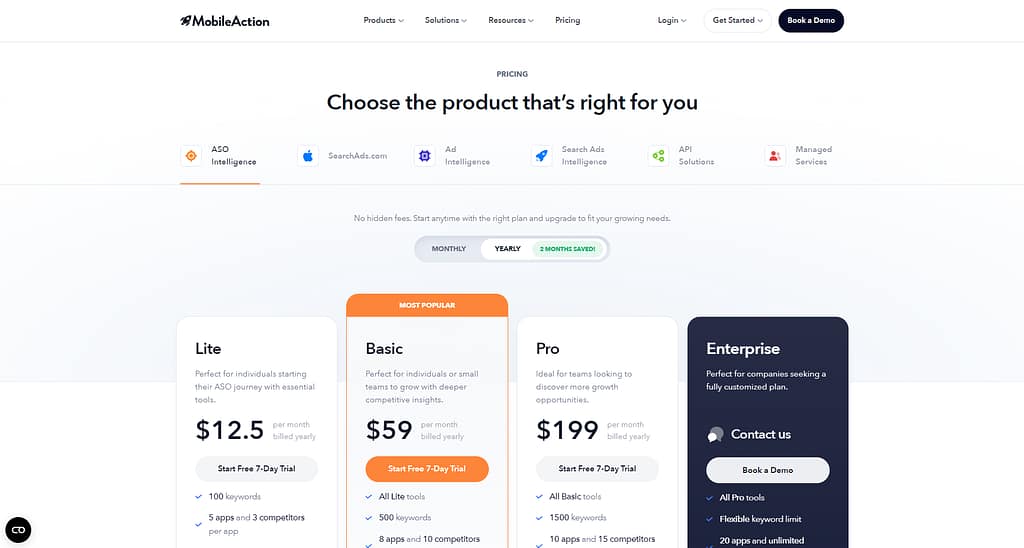
Mobile Action is the best ASO and Apple Search Ads platform for teams that connect organic keyword rankings with paid keyword and campaign intelligence. According to Mobile Action Pricing, Mobile Action shows public starter pricing from $12.5/mo and includes a 7-day ASO trial.
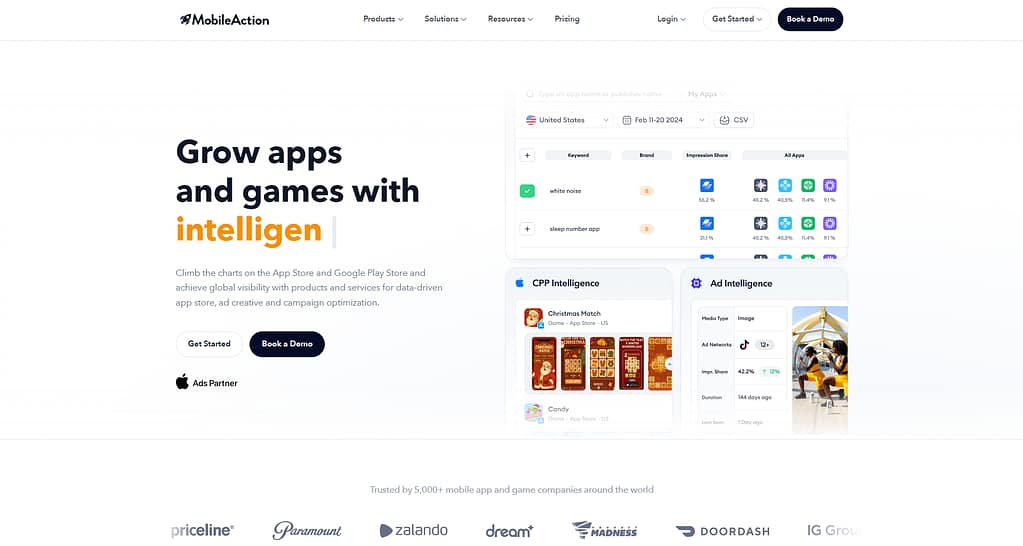
Mobile Action provides keyword research, metadata analysis, competitor insights, ranked keyword data, Apple Search Ads intelligence, custom product page analysis, and review monitoring. According to G2, Mobile Action holds a 4.4/5 rating.
The main Mobile Action strengths are paid-organic keyword alignment, Apple Search Ads visibility, and market-level app data. The main Mobile Action limitations are trial billing requirements, enterprise-gated onboarding, and less review-management depth than AppFollow. The Mobile Action review fits teams that treat Apple Search Ads and ASO as one app growth system.
6. ASODesk – Best For Keyword Tracking And Review Operations
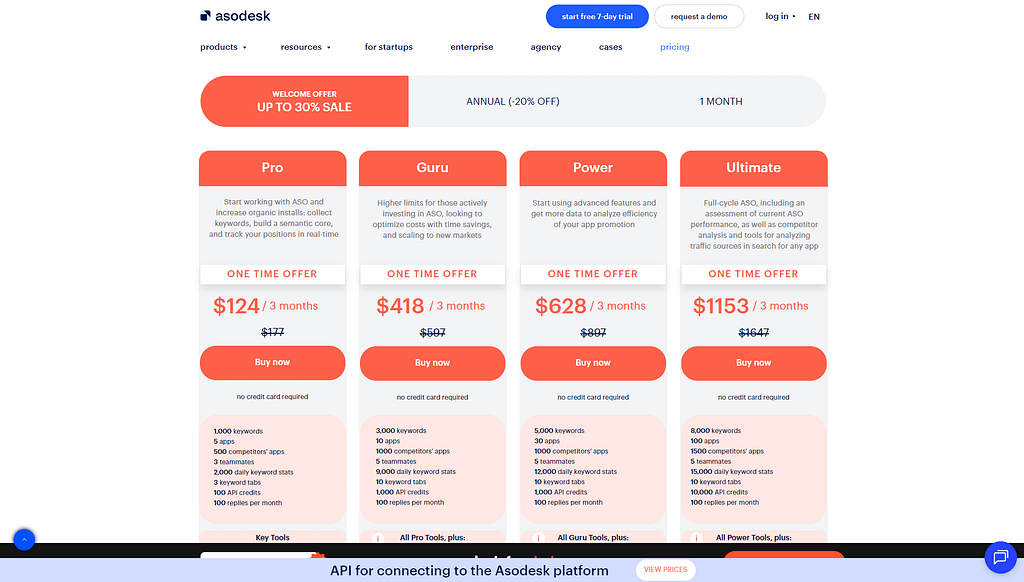
ASODesk is the best ASO keyword tracking and review operations platform for teams that build semantic cores, monitor rankings, optimize metadata, and manage reviews. According to SoftwareAdvice and SaaSAdviser pricing snippets, ASODesk public pricing signals start around EUR41/mo.
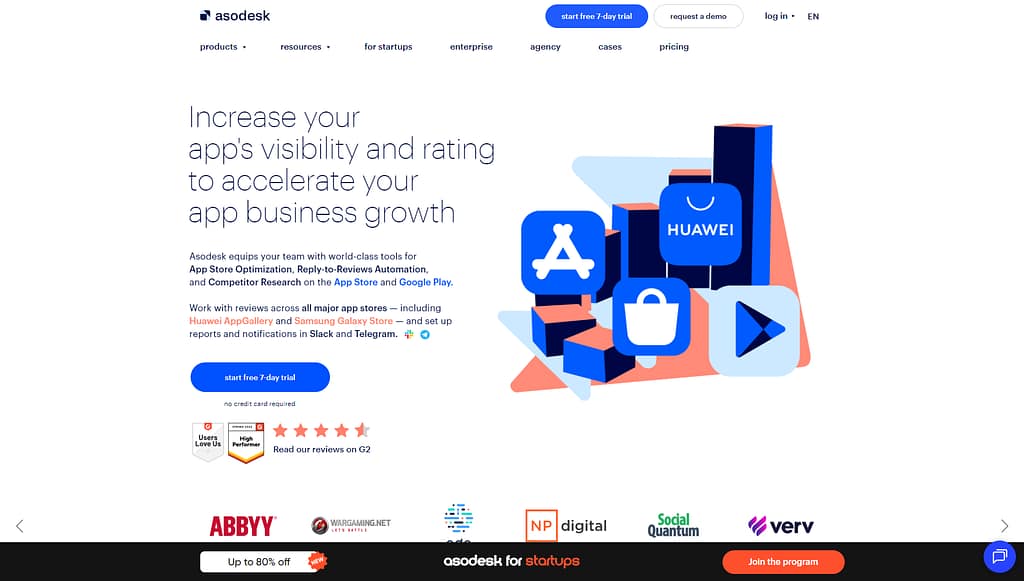
ASODesk provides semantic core collection, keyword position tracking, competitor analytics, ASO dashboards, listing optimization, review monitoring, and reply workflows. According to G2, ASODesk holds a 4.6/5 rating. According to Capterra, ASODesk holds a 4.8/5 rating.
The main ASODesk strengths are keyword tracking, semantic core workflows, and strong review-platform ratings. The main ASODesk limitations are less transparent official pricing and public comments around slow keyword position updates or outdated popularity values. The ASODesk review fits teams that prioritize rank monitoring and keyword operations.
What Are The Best App Market Intelligence Tools?
The best app market intelligence tools are Sensor Tower and 42matters because both tools focus on app data, competitor intelligence, app market trends, category movement, download estimates, revenue signals, and API-level data access.
The table separates market intelligence tools from daily ASO workflow tools because enterprise data platforms support strategy, not only keyword edits.
| Tool | Intelligence Focus | Pricing | Best Fit |
|---|
Market intelligence tools connect to best enterprise SEO tools thinking because data depth, exports, APIs, and category-wide analysis matter more than a low starter price.
7. Sensor Tower – Best Enterprise Market Intelligence Tool
Sensor Tower is the best enterprise app market intelligence tool for teams that analyze downloads, revenue estimates, active users, retention, ratings, reviews, ads, creatives, and category trends. Sensor Tower pricing is custom and demo-led.
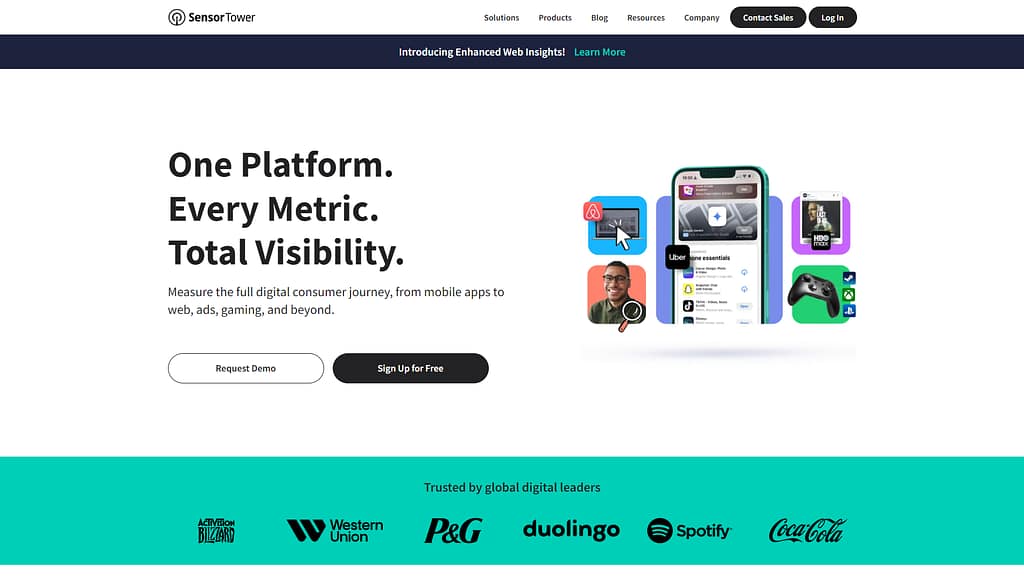
Sensor Tower supports competitor benchmarking, ad intelligence, app performance tracking, market share analysis, and mobile category research. According to G2, Sensor Tower holds a 4.3/5 rating.
The main Sensor Tower strengths are enterprise app intelligence, market coverage, and competitive data depth. The main Sensor Tower limitations are custom pricing, lower accessibility for indie developers, and public complaints around interface friction or ASO data accuracy. The Sensor Tower review fits enterprise teams evaluating app intelligence beyond metadata optimization.
8. Appbot – Best App Review Intelligence Tool
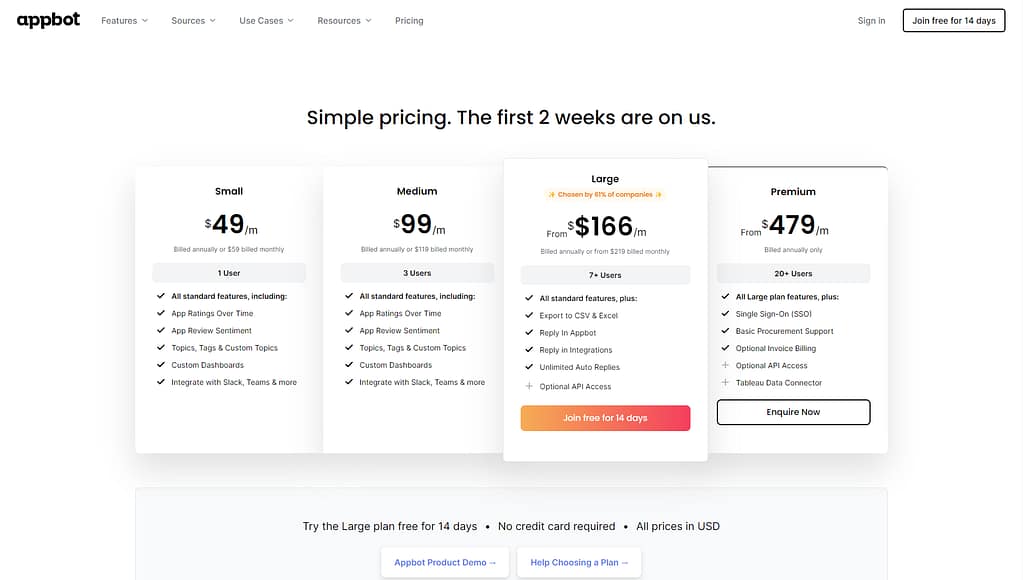
Appbot is the best app review intelligence tool for teams that analyze reviews, sentiment, topics, emotions, AI replies, and support integrations. According to Appbot Pricing, Appbot starts at $49/mo monthly or $49/mo annually and includes a 14-day free trial.
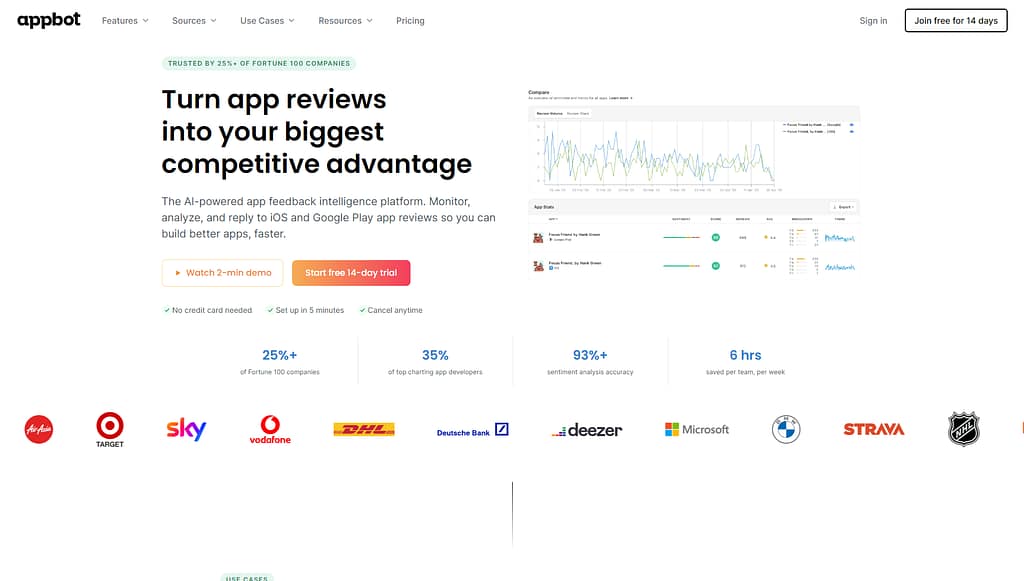
Appbot monitors app reviews, classifies sentiment, detects topics, summarizes emotions, supports AI replies, and integrates with Slack, Zendesk, Jira, and Microsoft Teams. According to G2, Appbot holds a 4.6/5 rating. According to Capterra, Appbot holds a 4.5/5 rating.
The main Appbot strengths are review analysis, support integrations, and focused sentiment intelligence. The main Appbot limitations are weaker keyword research, no full ASO suite, and plan limits around sources or users. The Appbot review fits teams that already own keyword tracking and lack review intelligence.
9. ASO.dev – Best App Store Connect Workflow Tool
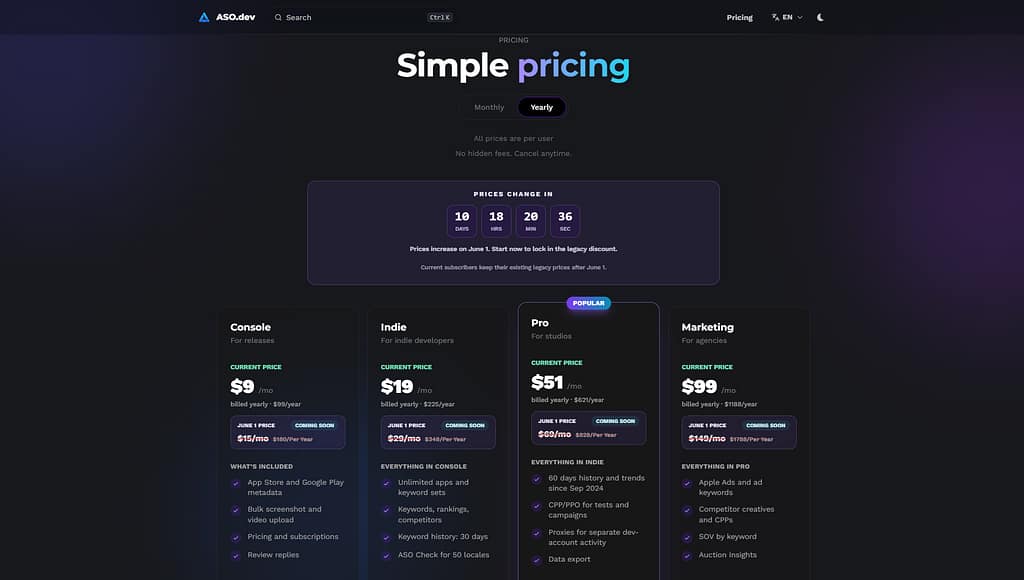
ASO.dev is the best App Store Connect workflow tool for teams that edit metadata, run ASO checks, inspect keyword rankings, and manage app store assets in a developer-oriented interface. According to ASO.dev Pricing, ASO.dev lists a 3-day trial and legacy ASO pricing from $9/seat/mo, with public page messaging around a move to $51/mo.
ASO.dev provides metadata editing, ASO checks, keyword rankings, competitor analysis, custom product page support, product page optimization support, and Apple Ads insight features. ASO.dev is narrower than enterprise ASO suites because ASO.dev focuses strongly on App Store Connect workflows.
The main ASO.dev strengths are Apple workflow fit, metadata efficiency, and product-page operation support. The main ASO.dev limitations are short trial length, tier-specific feature limits, and less public rating evidence than AppTweak or AppFollow. The ASO.dev review fits technical ASO teams that manage Apple metadata often.
10. Gummicube – Best Managed ASO Service With Testing Technology
Gummicube is the best managed ASO service with proprietary technology for app teams that want ASO strategy, metadata optimization, conversion optimization, A/B testing, and focus-group research. Gummicube pricing is custom and service-led.
Gummicube uses ASO services, DATACUBE technology, metadata optimization, creative testing, paid search support, and conversion research. According to Clutch, Gummicube holds a 5.0/5 rating.
The main Gummicube strengths are managed ASO expertise, research support, and conversion testing. The main Gummicube
11. Geeklab – Best Creative Testing Tool
Geeklab is the best creative testing tool for app teams that validate app concepts, icons, screenshots, app store pages, and user acquisition messages before full launch. According to Geeklab Pricing, Geeklab starts at EUR300/mo and includes a 7-day free trial.
Geeklab provides concept validation, fake-store tests, product-page tests, surveys, app analytics, icon generation, and user acquisition testing workflows. According to G2, Geeklab holds a 4.3/5 rating. According to Capterra, Geeklab holds a 5.0/5 rating.
The main Geeklab strengths are pre-launch validation, creative testing, and store-page experimentation. The main Geeklab limitations are high entry price, one-test-per-month limit on entry plans, and less keyword-ranking depth than AppTweak. The Geeklab review fits game studios and app publishers with creative testing budgets.
limitations are non-public pricing, agency/service delivery, and less self-serve workflow control than AppTweak or App Radar. The Gummicube review fits teams that prefer managed ASO execution over software-only workflows.
12. 42matters – Best App Data API Tool
42matters is the best app data API tool for teams that build app intelligence workflows using app store data, market datasets, Explorer access, APIs, and data dumps. 42matters pricing is custom and now sits under Similarweb ownership.
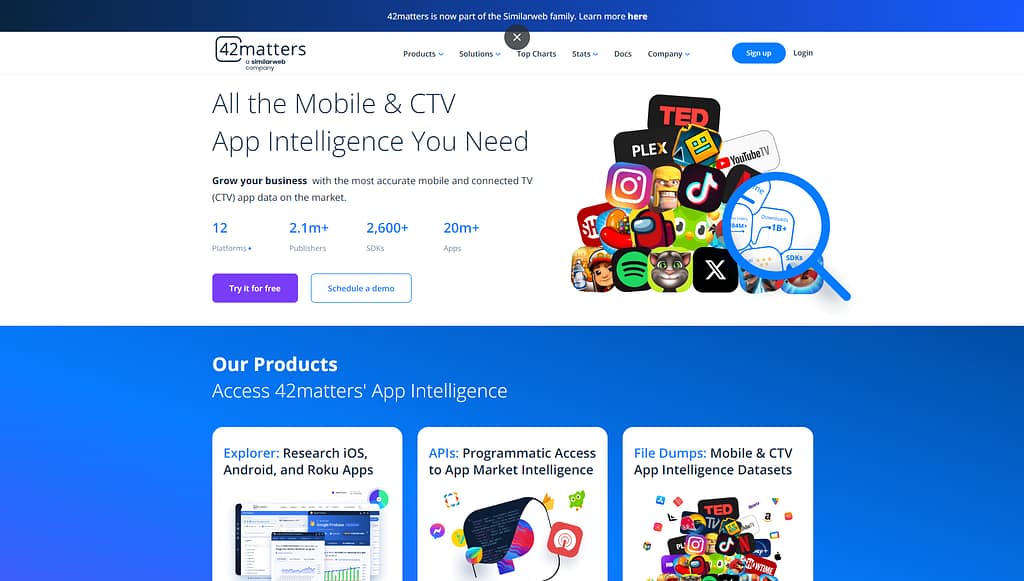
42matters provides app metadata, ratings, categories, publisher information, store data, API access, and bulk data delivery. According to G2 signals for Similarweb App Intelligence and 42matters, the rating evidence sits around 4.6/5.
The main 42matters strengths are API access, dataset depth, and data-team fit. The main 42matters limitations are custom pricing, lower self-serve ASO workflow depth, and less beginner-friendly positioning. The 42matters review fits teams building internal ASO dashboards or app intelligence products.
What Are The Best Free First-Party App Store SEO Tools?
The best free first-party App Store SEO tools are App Store Connect and Google Play Console because Apple and Google provide direct app analytics, store listing controls, performance metrics, and first-party experiment data.
The table compares the two first-party consoles by platform, cost, ASO function, and limitation.
| Tool | Platform | Cost Signal | ASO Function | Limitation |
|---|
First-party tools resemble best free SEO tools because direct platform data costs less than third-party intelligence and covers fewer competitor insights.
13. App Store Connect – Best Free Apple First-Party Tool
App Store Connect is the best Apple first-party ASO tool for iOS teams because App Store Connect controls app metadata, app analytics, product pages, in-app events, and product page optimization. According to Apple Developer, distribution through the Apple Developer Program costs $99/year.
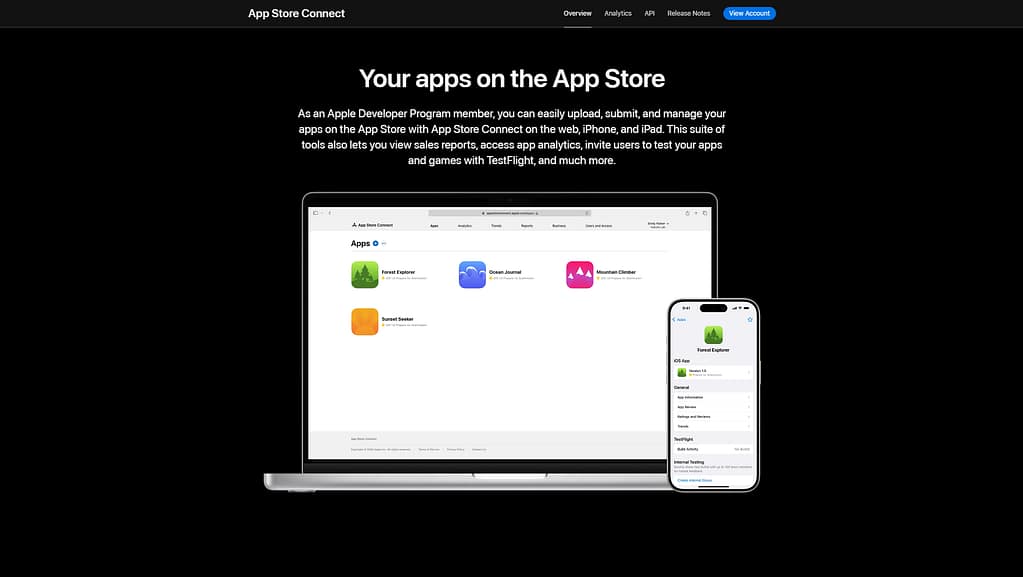
App Store Connect shows impressions, product page views, conversion rates, downloads, proceeds, retention signals, and campaign data under Apple privacy rules. App Store Connect also supports custom product pages and product page optimization for conversion testing.
The main App Store Connect strengths are direct Apple data, listing control, and product page testing. The main App Store Connect limitations are Apple-only scope, privacy thresholds, and limited competitor keyword intelligence. The App Store Connect review fits iOS teams that require first-party ASO measurement.
14. Google Play Console – Best Free Google Play First-Party Tool
Google Play Console is the best Google Play first-party ASO tool for Android teams because Google Play Console controls Android listings, store experiments, acquisition reports, Android vitals, ratings, and release data. According to Google Play Help, Google Play developer registration costs $25 once.
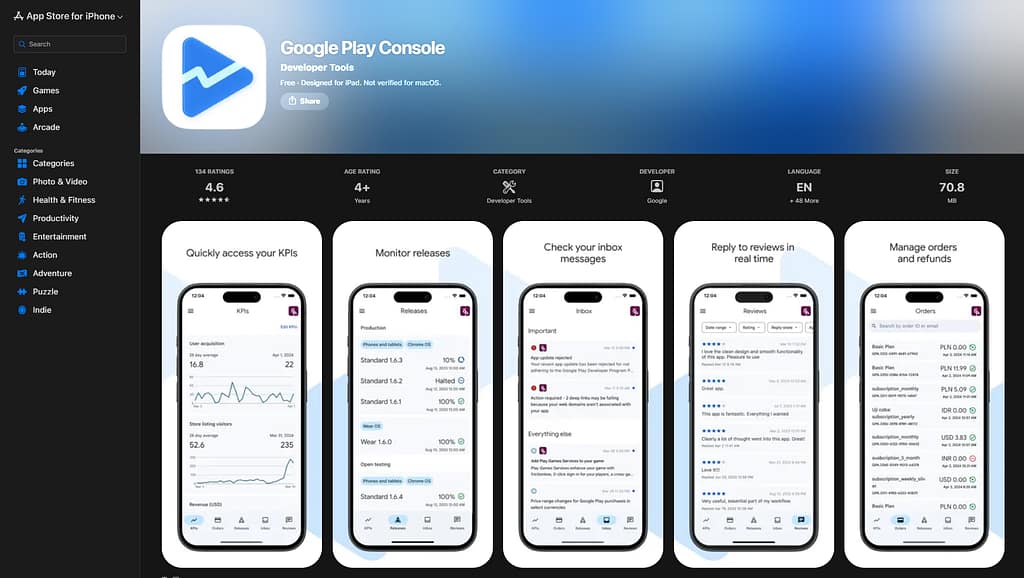
Google Play Console supports store listing experiments, custom store listings, acquisition analysis, performance diagnostics, pre-launch reports, and review monitoring. Google Play Console supplies direct Google Play data unavailable inside third-party platforms.
The main Google Play Console strengths are first-party Android data, store listing experiments, and technical performance signals. The main Google Play Console limitations are Google Play-only scope, limited Apple visibility, and personal developer account testing requirements. The Google Play Console review fits Android ASO measurement.
15. ASOTools.io – Best Lightweight Keyword Research Tool
ASOTools.io is the best lightweight ASO keyword research tool for budget users that want app keyword ideas, app research, competitor keyword checks, and ranking data. ASOTools.io presents ASO keyword and app research as free tool access, while third-party pages cite paid plans from $9/mo.
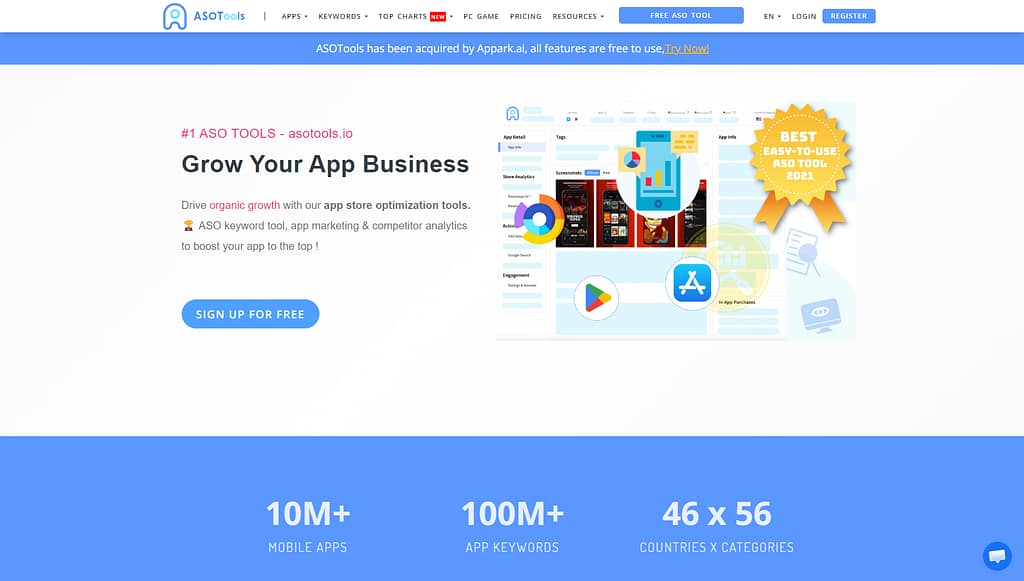
ASOTools.io supports keyword research, app lookup, competitor keyword analysis, and rankings by revenue or installs. According to G2, ASOTools.io holds a 4.8/5 rating.
The main ASOTools.io strengths are low-cost access, lightweight keyword checks, and simple ASO discovery. The main ASOTools.io limitations are unclear official paid-plan detail, lighter reporting than AppTweak, and less workflow depth than App Radar. The ASOTools.io review fits keyword-first budget comparison.
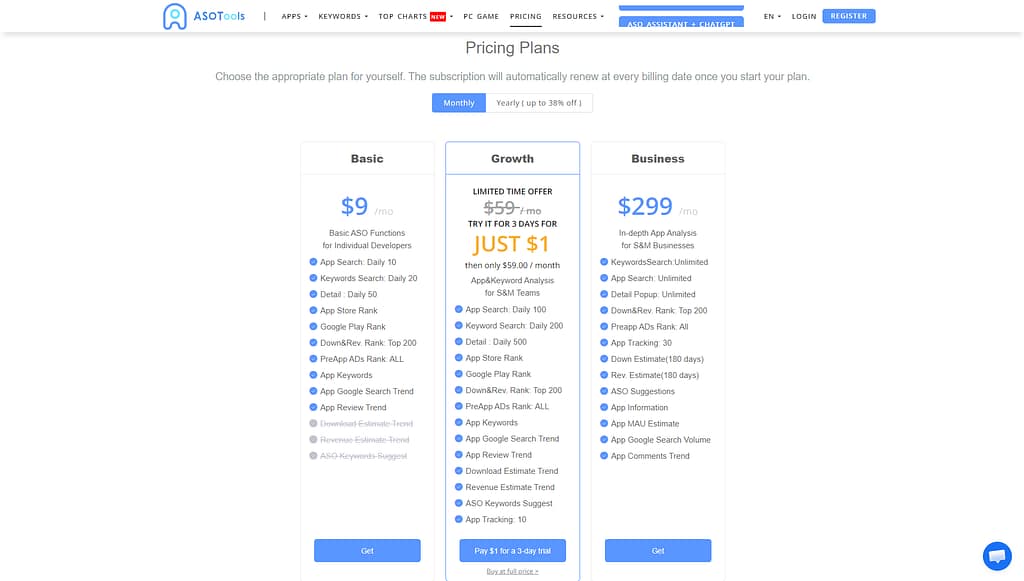
16. Keyword Tool – Best Cross-Platform Keyword Suggestion Tool
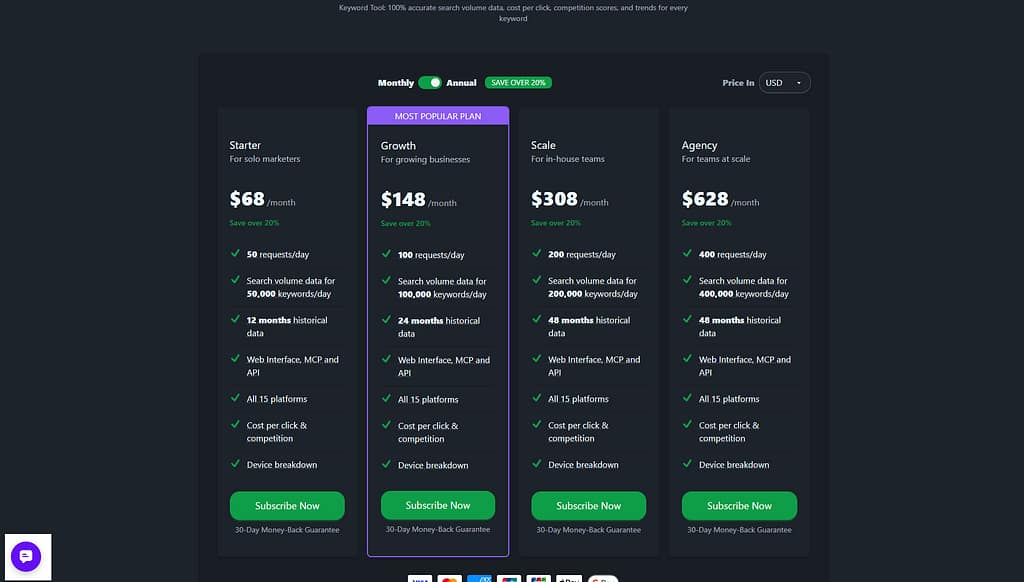
Keyword Tool is the best cross-platform keyword suggestion tool for ASO teams that collect App Store and Google Play autocomplete keywords. According to KeywordTool.io Pro, Keyword Tool provides free keyword suggestions and paid Pro tiers, including a Growth public signal at $148/mo.
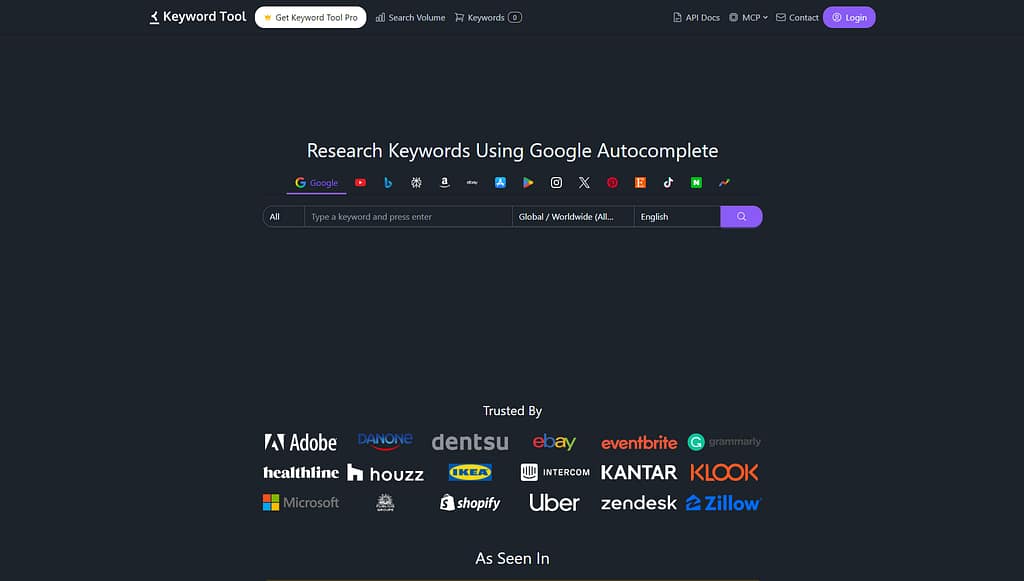
Keyword Tool supports keyword discovery across Google, YouTube, Amazon, Bing, App Store, Instagram, X, Pinterest, and Google Play. The App Store and Google Play features use autocomplete and modeled estimates rather than a full ASO rank-tracking system.
The main Keyword Tool strengths are broad autocomplete coverage, free keyword suggestions, and fast cross-platform discovery. The main Keyword Tool limitations are limited ASO workflow depth, weaker competitor monitoring, and paid-plan cost for search-volume access. The Keyword Tool review fits keyword expansion before deeper ASO validation.
What Are The Best Review, Creative, And Keyword Support Tools?
The best review, creative, and keyword support tools are Appbot, Geeklab, Gummicube, and Keyword Tool because these tools strengthen specific ASO workflows outside full all-in-one ASO suites.
The table maps each support tool to the ASO workflow where the tool adds the most value.
| Tool | Support Category | Starting Price | Best ASO Use |
|---|
Creative and review tools connect to best content optimization tools because conversion quality depends on store copy, visuals, reviews, and message-market fit.
Which App Store SEO Tool Fits Each Use Case?
The best App Store SEO tool depends on 8 use cases: overall ASO intelligence, review management, keyword research, market intelligence, creative testing, budget analytics, Apple-first ASO, and Google Play-first ASO.
The table maps each use case to the best primary tool and strongest alternative.
| Use Case | Best Primary Tool | Strong Alternative | Reason |
|---|
Beginners comparing best SEO tools for beginners often favor lower-cost tools such as Appfigures, ASOTools.io, and first-party consoles before adopting enterprise ASO platforms.
What Do App Store SEO Tools Cost?
App Store SEO tools cost $0 to custom enterprise pricing depending on keyword limits, app limits, seats, historical data, market intelligence, review workflows, and managed-service depth.
The pricing table compares free access, trial access, public starter prices, and budget fit.
| Tool | Free Plan / Trial | Public Starting Price | Pricing Type | Budget Fit |
|---|
The strongest cheap SEO tools pattern for ASO starts with App Store Connect, Google Play Console, ASOTools.io, Appfigures, and Keyword Tool before adding AppTweak, AppFollow, or Mobile Action.
Which Tools Are Adjacent To App Store SEO?
Adjacent App Store SEO tools are app growth tools that support ASO outcomes without replacing ASO software. AppsFlyer, Adjust, Branch, Singular, Apple Ads, Google App Campaigns, Canva, Figma, Animoto, and PickFu sit beside ASO platforms.
| Category | Tools | What it does |
|---|
Adjacent tools fit best paid SEO tools thinking because attribution, ad systems, and creative platforms measure or amplify ASO work rather than replace keyword tracking and store optimization.
What Are The Final Tool Rankings And Scores?
Each tool was evaluated using Google Search Results Consensus and the FassihFayyaz.net 100-point scoring framework. The final score weighs core performance, budget-tier value, interface quality, ecosystem fit, and product momentum. Permanent scores require a minimum 14-day live environment deployment; these scores are provisional.
| # | Tool | Score | Grade | Score Status | Google Consensus | Best For | Final Verdict |
|---|
The score breakdown uses 40 points for core performance, 25 points for budget value, 15 points for interface quality, 10 points for ecosystem sync, and 10 points for roadmap velocity.
| Tool | Core | Budget | Interface | Ecosystem | Roadmap | Total |
|---|
What Are The Most Common Questions About App Store SEO Tools?
The most common questions about App Store SEO tools cover overall tool choice, free ASO tools, AppTweak versus AppFollow, keyword research, review management, and Apple App Store versus Google Play workflows.
What Is The Best App Store SEO Tool Overall?
The best App Store SEO tool overall is AppTweak for broad ASO intelligence because AppTweak combines keyword research, competitor monitoring, metadata analysis, Apple Ads data, review analysis, and reporting with a 91/100 provisional score.
AppFollow ranks higher for review-heavy teams. Sensor Tower ranks higher for enterprise market intelligence. Appfigures ranks higher for low-cost analytics.
What Is The Best Free ASO Tool?
The best free ASO tools are App Store Connect for iOS and Google Play Console for Android because both consoles provide first-party listing controls, analytics, experiments, and performance data.
App Store Connect requires Apple Developer Program access for distribution at $99/year. Google Play Console requires a $25 one-time registration fee. A broader best free SEO tools stack covers web SEO, not app-store-specific ASO.
Is AppTweak Better Than AppFollow?
AppTweak is better for keyword intelligence and competitor research, while AppFollow is better for review management and ratings workflows. AppTweak scores 91/100, and AppFollow scores 88/100 in the provisional ranking.
AppTweak fits teams that prioritize ASO strategy, metadata, and paid-organic keyword intelligence. AppFollow fits teams that prioritize reviews, replies, customer sentiment, and reputation workflows. The AppTweak vs AppFollow comparison fits this buying decision.
Which ASO Tool Is Best For Keyword Research?
The best ASO tools for keyword research are AppTweak, Mobile Action, ASODesk, and ASOTools.io because these tools track app keywords, competitor keywords, rank movement, search-volume signals, and store-specific keyword opportunities.
AppTweak provides the strongest overall keyword intelligence. Mobile Action adds Apple Search Ads context. ASODesk fits rank-tracking workflows. ASOTools.io fits lightweight keyword discovery. A web-focused best keyword research tools stack serves Google SEO rather than ASO.
Which ASO Tool Is Best For Reviews?
The best ASO tool for reviews is AppFollow for ASO plus review management, while Appbot is the best dedicated review intelligence tool. AppFollow combines keywords, competitors, reviews, and replies. Appbot focuses on sentiment, topics, emotions, and support integrations.
According to G2, both AppFollow and Appbot hold 4.6/5 ratings. The AppFollow review fits teams comparing review automation with ASO tracking.
Do Apple App Store And Google Play Require Different ASO Tools?
Apple App Store and Google Play require different first-party tools and shared third-party ASO platforms because App Store Connect supplies Apple data and Google Play Console supplies Android data.
AppTweak, AppFollow, App Radar, Mobile Action, ASODesk, and Appfigures support cross-platform ASO workflows. App Store Connect remains essential for iOS, while Google Play Console remains essential for Android. The related best Android SEO tools and best Apple SEO tools pages cover platform-specific tool stacks.
App Store SEO tools create the strongest results when keyword intelligence, competitor monitoring, review management, creative testing, and first-party store data work together. The best App Store SEO tools for most teams start with AppTweak, AppFollow, Appfigures, Mobile Action, App Radar, App Store Connect, and Google Play Console, then expand into Sensor Tower, Geeklab, Appbot, or Gummicube based on budget and ASO maturity.